Multi-Country E-Commerce Compliance: Managing DPPs Across EU Markets from One Shopify Store
One of the biggest advantages of e-commerce is the ability to sell across borders from a single Shopify store. But when it comes to Digital Product Passport (DPP) compliance under the EU's Ecodesign for Sustainable Products Regulation (ESPR), that multi-market advantage comes with significant complexity.
Here's the challenge: While the ESPR establishes EU-wide DPP requirements, implementation varies by member state. Language requirements differ. National labeling laws add extra layers. And consumer expectations about transparency vary significantly from Germany to Greece, from France to Finland.
This comprehensive guide walks you through how to manage DPP compliance across multiple EU markets from a single Shopify store—without losing your mind or your profit margins.
Why a Single DPP Doesn't Always Work Across All EU Markets
The ESPR creates a harmonized framework, but it's not perfectly uniform. Several factors mean you can't simply create one DPP and deploy it everywhere:
Language Requirements
The ESPR requires DPPs to be provided in the official language(s) of the member state where products are sold. This means:
- Products sold in Belgium need DPPs in Dutch, French, and German
- Products in Luxembourg require French, German, and Luxembourgish
- Irish products technically require both Irish and English (though English is sufficient in practice)
- Products across most other markets need language-specific versions
Simply providing an English-only DPP won't meet legal requirements in most EU markets.
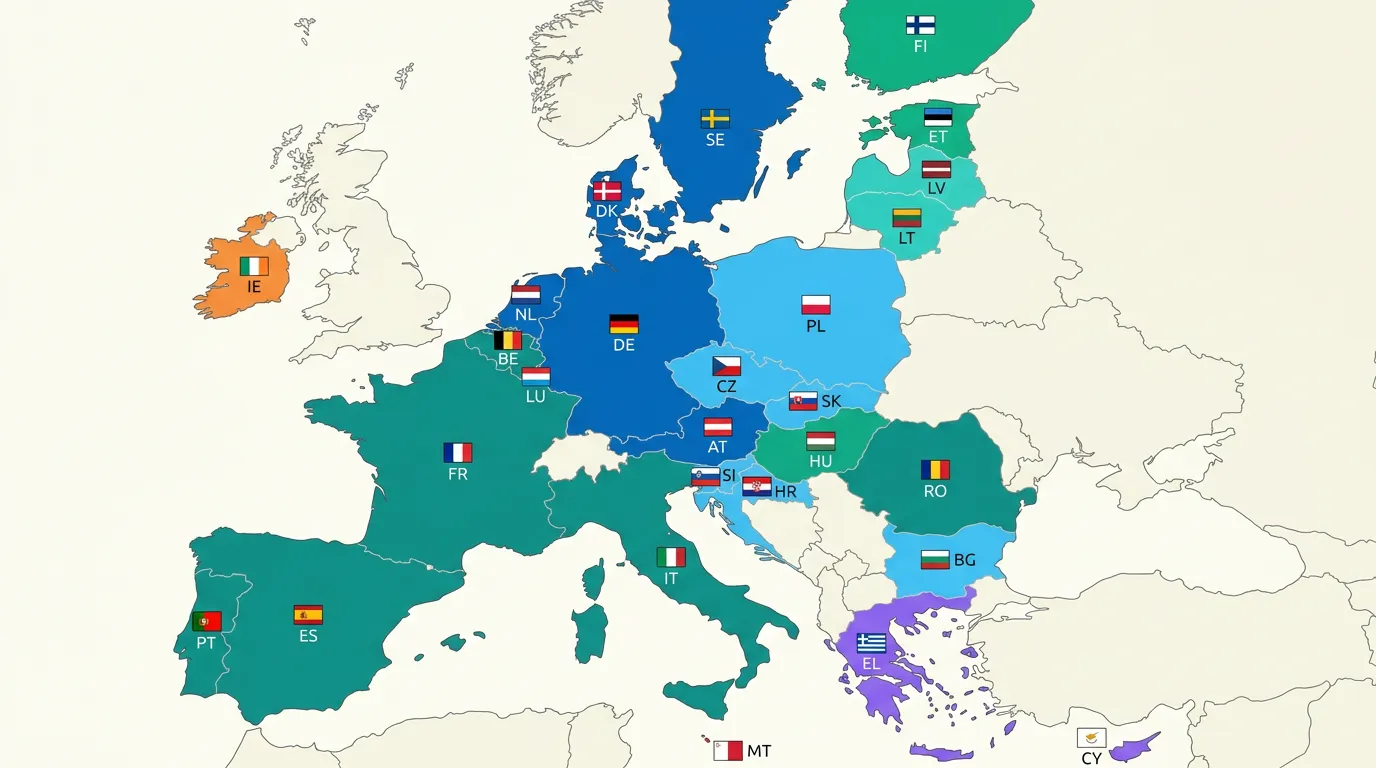
National Implementation Differences
While the ESPR is an EU regulation (directly applicable), member states have discretion in enforcement priorities and interpretation. Key differences include:
Germany
- Strictest interpretation of DPP data quality requirements
- Additional packaging requirements under VerpackG (Packaging Act)
- Mandatory registration with LUCID packaging registry
- Emphasis on extended producer responsibility (EPR) documentation
France
- AGEC Law (Anti-Waste Law) adds requirements beyond ESPR
- Mandatory Triman symbol on all recyclable products
- Repairability Index required for electronics since 2021
- Durability Index coming in 2026
- Strong emphasis on local language (French) in all consumer materials
Italy
- Unique labeling requirements under Environmental Labeling Decree
- Mandatory environmental labeling on all packaging components
- Specific recycling instruction formats
- Collection system codes (e.g., "C/PAP 81" for cardboard)
Netherlands
- Strong focus on chemical content disclosure
- Strict enforcement of consumer accessibility requirements
- High consumer expectations for supply chain transparency
Spain
- Additional regional language requirements (Catalan, Basque, Galician in certain regions)
- Regional EPR schemes with different requirements
Consumer Expectations and Market Norms
Beyond legal requirements, consumer expectations vary:
- Nordic countries (Sweden, Denmark, Finland): Extremely high transparency expectations; consumers actively use QR codes and seek detailed supply chain information
- Germany and Austria: Strong emphasis on certifications and third-party verification
- Southern Europe (Italy, Spain, Greece, Portugal): Growing but less mature market for digital transparency; clearer focus on traditional labeling
- France: Strong consumer advocacy culture; high risk of regulatory complaints if transparency falls short
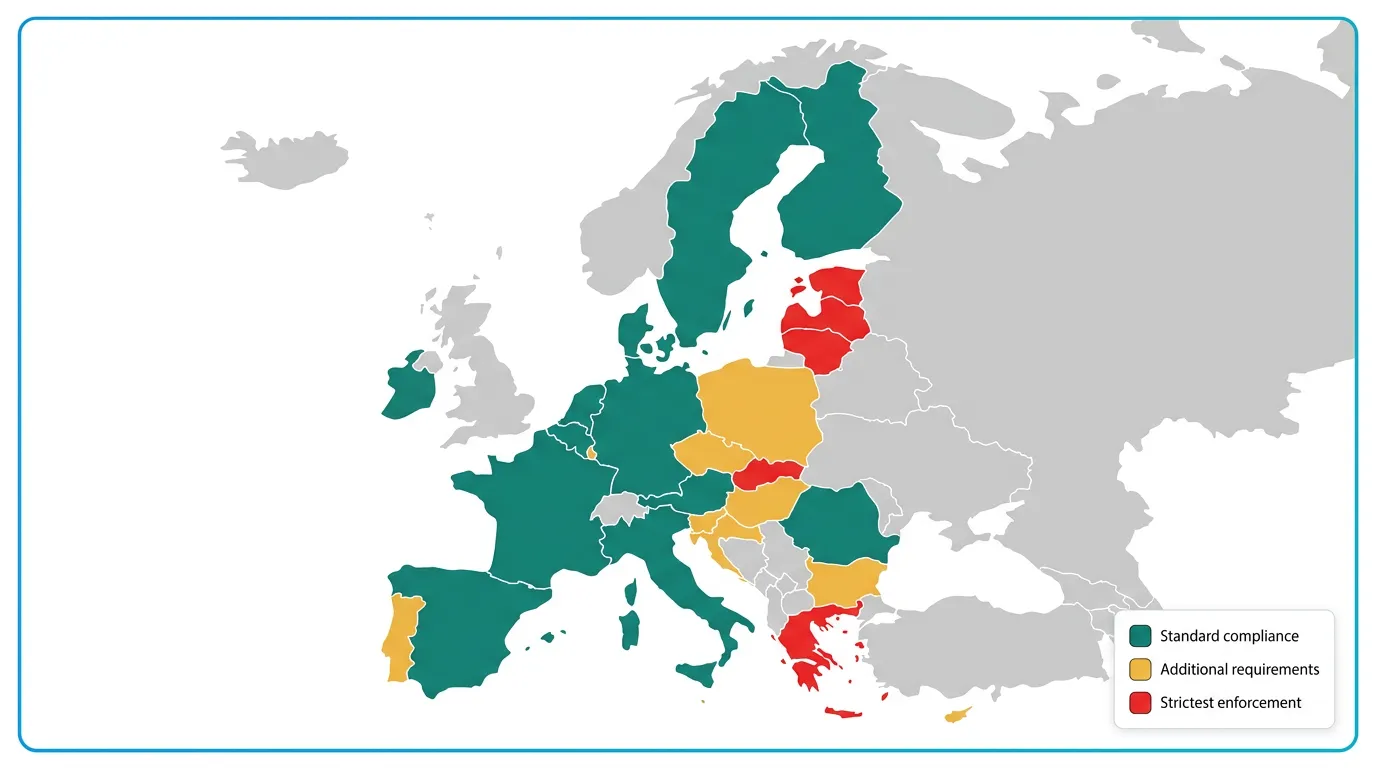
Which EU Member States Have Additional Requirements Beyond ESPR?
While all 27 EU member states must comply with ESPR, several have national laws that add requirements:
Countries with Significant Additional Requirements
France
- AGEC Law (since 2020)
- Repairability/Durability Index mandates
- Triman symbol requirement
- French-language priority (Toubon Law)
Germany
- VerpackG (Packaging Act)
- ElektroG (Electrical Equipment Act)
- BattG (Battery Act)
- Supply Chain Due Diligence Act (affects supply chain transparency requirements)
Italy
- Environmental Labeling Decree (2020)
- Mandatory packaging component labeling
Netherlands
- Extended chemical disclosure requirements
- Consumer accessibility standards
Austria
- Packaging Ordinance
- Market-specific EPR requirements
Countries with Moderate Additional Requirements
Spain, Belgium, Portugal: Various EPR schemes and packaging laws that require additional documentation but don't fundamentally duplicate DPP requirements.
Countries Largely Aligned with ESPR
Most Eastern European countries, Ireland, and smaller member states generally don't have significant additional national requirements beyond ESPR compliance.
Language and Localization Requirements for DPP Data
Getting language right is non-negotiable. Here's what you need to know:
Core Language Requirements
Official Languages by Market (where DPP must be available):
- Single official language: Most markets (e.g., Germany=German, France=French, Spain=Spanish, Italy=Italian)
- Multiple official languages:
- Belgium: Dutch, French, German
- Luxembourg: French, German, Luxembourgish
- Malta: Maltese, English
- Ireland: Irish, English (English sufficient in practice)
- Cyprus: Greek, Turkish (market dependent)
What Needs Translation?
Mandatory translations:
- Product specifications and technical data
- Safety and usage instructions
- Environmental impact information
- End-of-life disposal instructions
- Materials composition
- Manufacturing location information
- Consumer rights notices
Optional (but recommended):
- Supply chain storytelling and brand narrative
- Detailed sustainability methodology
- Extended producer responsibility information
- Repair and maintenance guides
Translation Quality Standards
Machine translation alone won't meet legal requirements for regulated information. You need:
- Professional translation for compliance-critical content (safety, disposal, legal notices)
- Native review to ensure terminology matches local market expectations
- Technical accuracy especially for materials science and environmental terms
- Consistency across all product passports in a given market
Special Cases: Regional Languages
In some markets, regional languages create additional considerations:
Spain: While Spanish is sufficient for legal compliance, providing Catalan in Catalonia, Basque in Basque Country, and Galician in Galicia significantly improves consumer experience and can be required by regional consumer protection authorities.
Belgium: Brussels operates in French and Dutch; Flanders in Dutch; Wallonia in French. Knowing your customer's region helps prioritize.
Managing Multiple Currencies and Regulatory Bodies
Multi-market selling means dealing with different financial and regulatory systems:
Currency Considerations for DPP Compliance
While DPPs focus on product information rather than pricing, currency matters for:
EPR Fees: Extended Producer Responsibility fees are calculated and paid in local currency to national schemes. You might pay:
- Packaging fees to Der Grüne Punkt (Germany) in EUR
- CITEO fees (France) in EUR
- Different EPR schemes in each country with country-specific rates
Compliance Costs: Third-party verification, testing, and certification costs are typically invoiced in the issuing country's currency.
Shopify Markets: Shopify's multi-currency features help manage customer-facing pricing but don't automatically handle compliance-related financial obligations.
Regulatory Bodies by Country
You'll interact with different authorities depending on what you sell:
Environmental Agencies
- Germany: Umweltbundesamt (UBA)
- France: ADEME
- Netherlands: RWS (Rijkswaterstaat)
- Italy: ISPRA
Consumer Protection Authorities
- Each member state has national consumer protection agencies
- They handle DPP accessibility complaints
- Enforcement varies significantly by country
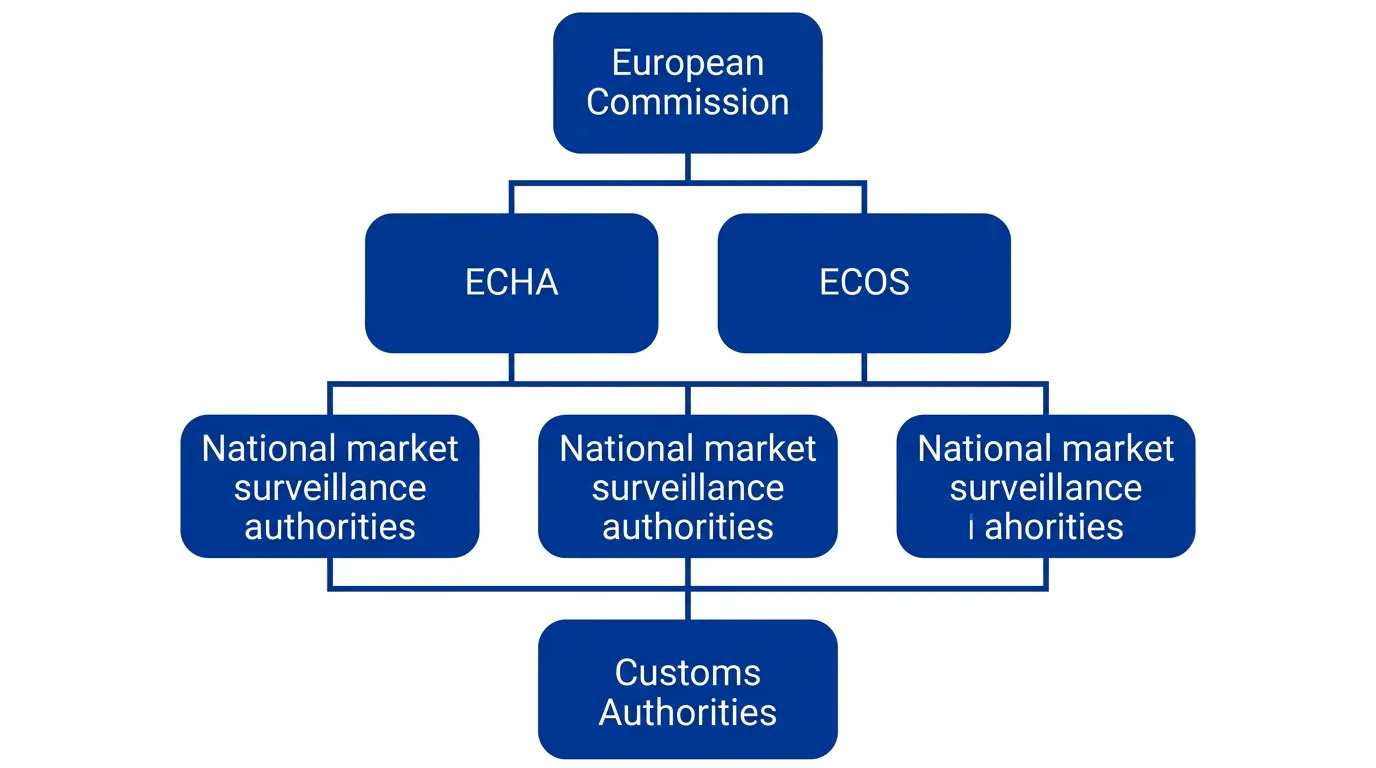
Market Surveillance Authorities
- Responsible for product safety and compliance verification
- Conduct random checks of DPPs for accuracy
- Can request documentation and levy fines
EPR Scheme Operators (non-governmental but mandatory)
- Packaging, electronics, batteries, textiles each have separate schemes
- Often country-specific with no cross-border recognition
- Require separate registration and reporting in each market
How to Set Up a Multi-Language Shopify Store with Compliant DPPs
Let's get practical. Here's how to actually configure multi-market DPP compliance in Shopify:
Step 1: Enable Shopify Markets
Shopify Markets is your foundation for managing multiple countries from one store.
Setup:
- In Shopify Admin, go to Settings > Markets
- Click "Add market" and group countries strategically:
- Language-based grouping: Group countries sharing languages (e.g., Germany+Austria, France+Belgium Wallonia)
- Regulation-based grouping: Group countries with similar DPP requirements
- Configure domains/subfolders:
yourstore.defor Germanyyourstore.frfor France- Or use subfolders:
yourstore.com/de,yourstore.com/fr
Why this matters for DPP: Markets allow you to control which products appear in which countries and serve market-specific content—including localized DPP links.
Step 2: Implement Multi-Language Support
You need to translate both your store and your DPP content.
Shopify Translation Options:
Option A: Shopify's Translate & Adapt app (built-in, free)
- Allows manual translation of product descriptions, policies, metafields
- Supports all Shopify languages
- Requires manual work but gives full control
Option B: Third-party translation apps
- Weglot: Automatic translation with professional review option
- Langify: Manual translation management
- GTranslate: Machine translation (not recommended for compliance content)
For DPP Content Specifically:
Your DPP platform needs to support multi-language content. This is where PassportPro becomes particularly valuable—it allows you to create language-specific versions of each DPP that automatically serve based on the customer's market.
Implementation approach:
- Create master DPP content in English (or your primary language)
- Translate compliance-critical sections professionally
- Use market-specific metafields in Shopify to store translated DPP data
- Configure DPP QR codes to detect customer language and serve appropriate version
Step 3: Create Market-Specific Product Data
DPP requirements mean you need market-specific product information:
Use Shopify Metafields:
Create custom metafields for each market's specific requirements:
dpp_germany.packaging_registration
dpp_germany.lucid_number
dpp_france.triman_symbol
dpp_france.repairability_score
dpp_italy.packaging_labels
dpp_italy.collection_codes
This allows you to maintain one product but serve market-appropriate compliance data.
Product Variants by Market (when necessary):
Some products may need actual variants for different markets:
- Different packaging (with market-specific symbols/labels)
- Different certifications (CE vs. country-specific)
- Different formulations (if regulations differ)
Use Shopify Markets to restrict variants to specific countries.
Step 4: Configure Market-Specific DPP QR Codes
Each product needs a QR code linking to its DPP. For multi-market compliance:
Approach A: Single Smart QR Code
- One QR code per product that detects customer location/language
- Redirects to appropriate language version of DPP
- Advantage: One physical code for all markets
- Disadvantage: Requires backend logic to handle routing
Approach B: Market-Specific QR Codes
- Different QR codes for each market
- Product packaging differs by destination
- Advantage: Guaranteed correct language/compliance
- Disadvantage: More complex inventory management
Recommended: Approach A for digital-only businesses; Approach B if you're manufacturing market-specific packaging anyway.
Implementation with Shopify:
Add QR code images to product metafields:
dpp_qr_code_url: https://yourstore.com/dpp/[product-id]?market=auto
Use market detection to serve localized DPP content based on customer's IP, language preference, or explicit market selection.
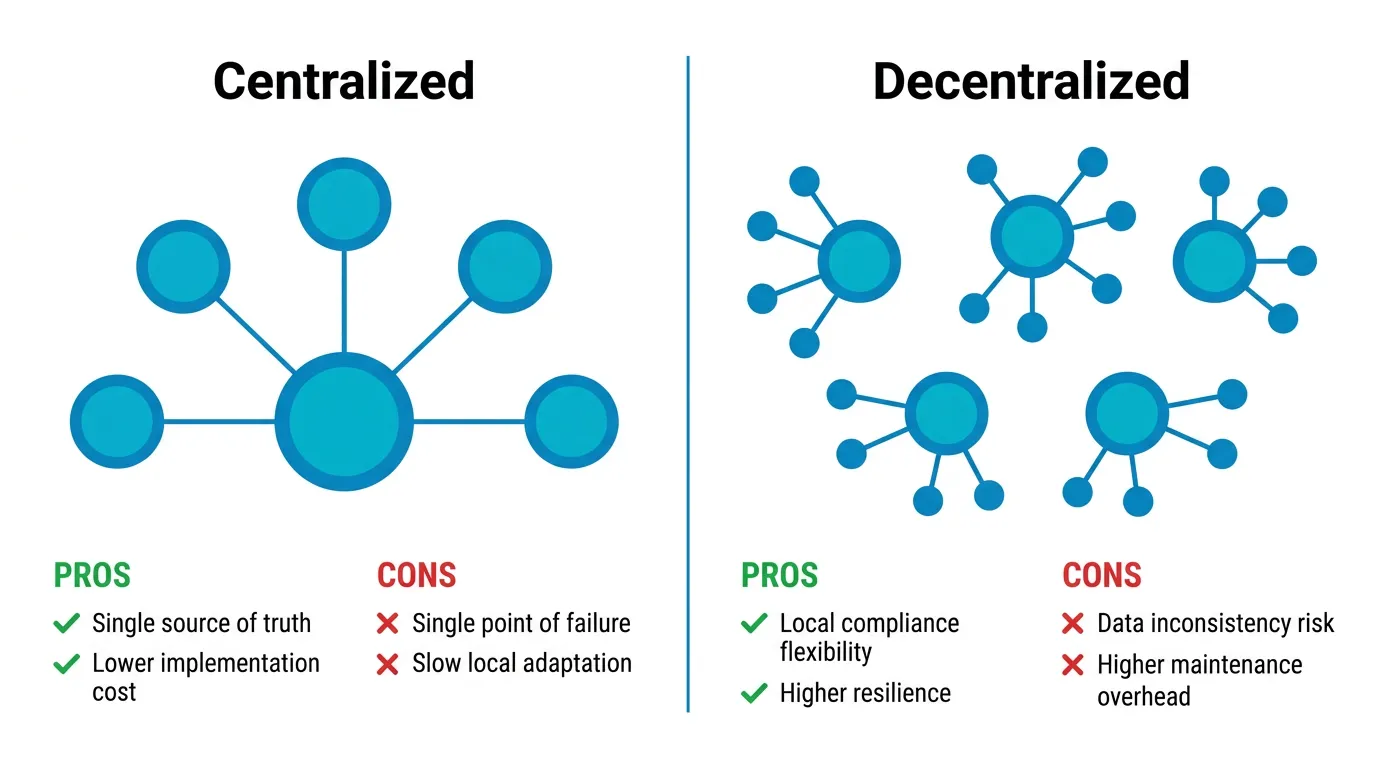
Step 5: Centralized vs. Decentralized Compliance Management
You have two fundamental approaches:
Centralized Approach
- Single source of truth: One master database of compliance information
- Central team: Dedicated compliance team manages all markets
- Unified platform: One DPP management system for all countries
- Best for: Smaller catalogs, consistent products across markets, limited team
Decentralized Approach
- Local compliance teams: Each major market has local compliance specialist
- Market-specific platforms: Different tools/processes per market
- Local decision-making: Market managers control their compliance
- Best for: Large catalogs, significant product variation, established local operations
Hybrid Approach (recommended for most):
- Centralized master data and platform
- Local market reviewers who verify translations and market-specific requirements
- Central approval workflows with local input
A platform like PassportPro enables this hybrid model by providing centralized data management with role-based permissions for market-specific reviewers.
Country-Specific Labeling Requirements
Beyond DPPs, you need to understand physical labeling requirements that vary by country:
France: Triman Symbol
What it is: A standardized recycling symbol required on all recyclable household packaging since January 2022.
Requirements:
- Must appear on product or packaging (can be on DPP if physical space is limited)
- Accompanied by sorting instructions
- Required even if product is already labeled with other symbols
Implementation: Add Triman symbol to packaging design for French market or include prominent image in French-language DPP with sorting instructions.
Germany: Green Dot (Der Grüne Punkt)
What it is: Symbol indicating manufacturer has paid EPR fees to a dual system for packaging recovery.
Requirements:
- Optional (unlike France's Triman) but widely recognized
- Must register with a licensed dual system
- Pay fees based on packaging weight and material
Implementation: Register with a dual system like Interseroh or Landbell; receive permission to use Green Dot; add to packaging or DPP.
Italy: Environmental Labeling Codes
What it is: Mandatory alphanumeric codes identifying packaging material composition and collection instructions.
Requirements:
- Every packaging component must be labeled (e.g., C/PAP 81 for cardboard, C/PP 05 for polypropylene caps)
- Collection instructions ("Raccolta Carta" = collect as paper)
- Must be visible on packaging or accessible via QR code
Implementation: Identify all packaging components; assign appropriate codes from Italian Environmental Labeling Decree; add to packaging or comprehensive DPP.
Netherlands: Recycling Symbols
What it is: Various symbols indicating material type and recycling possibilities.
Requirements:
- No single mandatory symbol but consumer expectation for clear guidance
- Emphasis on accurate material disclosure
Implementation: Use standard international recycling symbols; provide clear Dutch-language disposal instructions in DPP.
Spain: Punto Verde (Green Dot Equivalent)
What it is: Spain's version of the Green Dot, managed by Ecoembes.
Requirements:
- Registration with Ecoembes for packaging
- Optional symbol but indicates compliance
Implementation: Register with Ecoembes; include symbol on packaging or indicate Ecoembes registration in DPP.
Cross-Border Implications
If you use the same physical packaging across multiple markets:
Option 1: Include all required symbols
- Add Triman, Green Dot, Italian codes, etc. to one packaging design
- Works but can look cluttered
Option 2: Use market-specific packaging
- Different packaging by destination
- Higher costs but cleaner appearance
Option 3: Leverage DPPs for country-specific requirements
- Minimal physical labeling (just essential safety/regulatory marks)
- Market-specific details in DPP accessed via QR code
- Most flexible approach and increasingly accepted
Practical Tips for Scaling from 1 to Multiple EU Countries
Ready to expand? Here's how to do it systematically:
Start with Strategic Market Selection
Don't try to launch in all 27 countries at once. Prioritize based on:
Market size: Germany, France, Italy, Spain, Netherlands represent 70%+ of EU e-commerce Language efficiency: German serves Germany+Austria; French serves France+Belgium+Luxembourg Regulatory complexity: Start with simpler compliance environments (e.g., Netherlands) before tackling Italy or France Existing demand: Use Google Analytics to see where current traffic comes from
Recommended launch sequence:
- Pilot: 1 major market (Germany or Netherlands)
- Expansion 1: Add 2-3 countries sharing language or similar regulations
- Expansion 2: Add France (requires more localization but huge market)
- Expansion 3: Southern Europe (Italy, Spain) with their unique labeling requirements
- Mature: Fill in remaining markets as operationally manageable
Build Compliance Before Marketing
Resist the temptation to market before compliance infrastructure is ready:
Pre-Launch Checklist per New Market:
- EPR registrations completed (packaging, batteries, electronics, textiles as applicable)
- DPP content translated and reviewed by native speaker
- Market-specific labeling requirements identified and implemented
- Regulatory authority contacts and escalation procedures documented
- Customer service team trained on market-specific questions
- Return/disposal logistics arranged
- Local legal review of consumer-facing terms and DPP content
Launching without compliance can result in enforcement actions, product seizures, and reputational damage that's hard to recover from.
Leverage Shopify Markets Features
Key features to maximize:
Market-specific pricing: Account for different VAT rates, EPR costs, logistics
Local payment methods: iDEAL (Netherlands), Bancontact (Belgium), Klarna (Nordics/Germany)
Localized checkout: Translated, market-appropriate checkout experience
Market domains: Country-specific domains build trust (yourstore.de vs. yourstore.com/de)
For DPP compliance specifically:
- Use market-specific metafields to store localized DPP data
- Configure market-specific product availability if certifications differ
- Leverage market-specific thank you pages to reinforce DPP access
Automate What You Can, Localize What Matters
Automate:
- DPP data population from supplier feeds
- QR code generation and market routing
- Translation of technical specifications (review by human)
- Compliance monitoring and alert systems
Localize manually (requires human judgment):
- Marketing copy and brand voice
- Customer service responses
- Certification priority (what consumers care about varies)
- Visual design (aesthetic preferences differ significantly)
Monitor Compliance Status by Market
Create a compliance dashboard tracking:
| Market | EPR Registered | DPP Translations | Local Labels | Next Audit | Status |
|---|---|---|---|---|---|
| Germany | ✓ | ✓ | ✓ | Q2 2026 | 🟢 Compliant |
| France | ✓ | ✓ | Partial | Q1 2026 | 🟡 In Progress |
| Italy | Pending | ✓ | ✗ | - | 🔴 Not Ready |
Regular review (quarterly) ensures nothing falls through cracks as regulations evolve.
Plan for Regulatory Changes
EU regulations are living documents. Stay ahead by:
- Subscribing to regulatory update services (EU Commission, national authorities)
- Joining industry associations in key markets
- Participating in DPP standardization working groups
- Building relationships with compliance consultants in major markets
- Budgeting for compliance updates (assume 10-15% of compliance costs annually for updates)
The Strategic Value of Multi-Market DPP Excellence
Getting multi-country DPP compliance right isn't just about avoiding penalties—it's a competitive advantage:
Consumer Trust: Brands that provide localized, comprehensive transparency build stronger customer relationships Market Expansion Speed: Robust compliance infrastructure lets you enter new markets faster Operational Efficiency: Centralized systems with local adaptation scale better than market-by-market custom solutions Retailer Relationships: Major European retailers increasingly require DPP compliance for onboarding Future-Proofing: As regulations tighten, early movers have compound advantages
Your Multi-Market DPP Roadmap
Ready to scale your Shopify store across EU markets with compliant DPPs? Follow this roadmap:
Phase 1: Foundation (Months 1-2)
- Audit current compliance status in existing market(s)
- Select DPP platform with multilingual support (like PassportPro)
- Set up Shopify Markets infrastructure
- Create master DPP content in primary language
Phase 2: First Market Expansion (Months 3-4)
- Select second market using criteria above
- Complete EPR registrations
- Translate and localize DPP content
- Implement market-specific labeling
- Set up local customer support
- Conduct soft launch with limited products
Phase 3: Optimization (Months 5-6)
- Analyze customer usage of DPPs in both markets
- Refine translation quality based on feedback
- Streamline workflow for third market preparation
- Automate repetitive compliance tasks
- Train team on expanded market procedures
Phase 4: Systematic Expansion (Months 7-12)
- Add markets quarterly using established process
- Continuously monitor regulatory changes across all markets
- Build economies of scale in translation and compliance
- Develop market-specific marketing highlighting transparency
- Iterate toward centralized platform with local customization
Ongoing: Maintenance & Evolution
- Quarterly compliance audits per market
- Annual deep review of DPP effectiveness
- Participation in regulatory consultations
- Continuous optimization based on customer behavior data
Conclusion: Multi-Market Compliance as Competitive Advantage
Managing Digital Product Passports across multiple EU markets from a single Shopify store is complex—but it's absolutely achievable with the right strategy and tools.
The brands that will thrive in the era of ESPR and DPPs are those that view multi-market compliance not as a cost center but as strategic infrastructure. By building robust, scalable systems for localized transparency, you create:
- Faster market expansion capabilities
- Stronger consumer trust across diverse markets
- Operational resilience as regulations continue evolving
- Competitive differentiation in increasingly transparent markets
The key is starting with solid foundations—choosing the right platform, building centralized data management with local flexibility, and scaling systematically rather than trying to do everything at once.
Whether you're currently selling in one EU country and looking to expand, or managing multiple markets without proper DPP infrastructure, now is the time to build systems that will scale with your ambitions.
Multi-market e-commerce in the EU is entering a new era of transparency. The winners will be those who embrace it as an opportunity to build deeper, more authentic relationships with customers across borders—all while meeting their regulatory obligations efficiently.
Need help managing Digital Product Passports across multiple EU markets? PassportPro's multilingual DPP platform allows Shopify merchants to create, translate, and manage market-specific product passports from a single dashboard—supporting compliance from Portugal to Poland, from Ireland to Italy. Discover how to turn multi-country complexity into competitive advantage.
Ready to get started?
Create EU-compliant Digital Product Passports for your Shopify store in minutes.
Install PassportPro on Shopify