EU Textile Strategy 2025: What Fashion and Apparel Sellers Must Know About DPP Requirements
The European Union's ambitious textile strategy is reshaping the fashion industry from the ground up. Following the successful implementation of Digital Product Passports (DPPs) for batteries, textiles have emerged as the second product category subject to comprehensive DPP requirements under the Ecodesign for Sustainable Products Regulation (ESPR). For Shopify merchants selling clothing, footwear, and textile products to EU customers, these changes represent both a compliance challenge and an opportunity to differentiate through transparency.
If you sell fashion or apparel products in the European market, the time to prepare is now. This comprehensive guide explains what the EU Textile Strategy means for your business, what data your Digital Product Passports must contain, and how to get ready for the upcoming requirements.
Understanding the EU Textile Strategy and Its DPP Requirements
The EU Strategy for Sustainable and Circular Textiles, adopted in March 2022, aims to transform how textiles are designed, produced, consumed, and disposed of across the European Union. At its core, the strategy recognizes that the fashion industry is one of the most polluting sectors globally, contributing to environmental degradation, excessive waste, and exploitative labor practices.
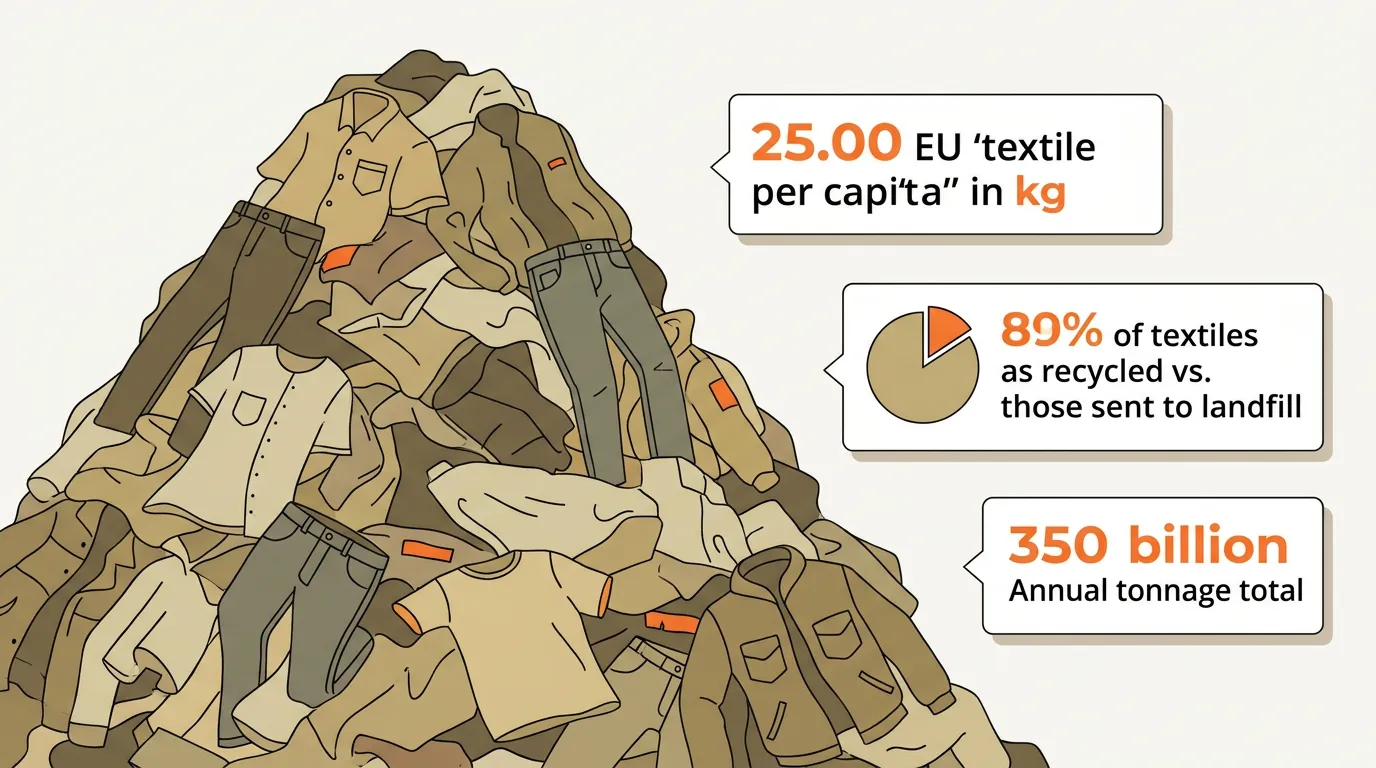
The textile industry produces approximately 92 million tons of waste annually, with Europeans discarding an average of 11 kilograms of textiles per person each year. Only about 1% of textile waste is recycled back into new clothing, creating a linear "take-make-dispose" system that the EU seeks to disrupt.
Digital Product Passports are central to this transformation. By requiring detailed, accessible information about every textile product sold in the EU, regulators aim to create accountability throughout the supply chain while empowering consumers to make informed purchasing decisions.
The Legal Framework: ESPR and Textile-Specific Delegated Acts
The Ecodesign for Sustainable Products Regulation (ESPR), which entered into force in July 2024, provides the legal foundation for sectoral DPP requirements. While ESPR establishes the overarching framework, specific requirements for textiles are being developed through delegated acts that detail exactly what information must be included, how it should be presented, and when compliance becomes mandatory.
The European Commission is currently finalizing these textile-specific delegated acts, with the following expected timeline:
- 2025: Publication of final delegated acts specifying textile DPP requirements
- 2026-2027: Transition period for industry preparation and system implementation
- 2027-2028: Mandatory compliance for most textile products sold in the EU
- 2030: Full enforcement across all textile categories
This phased approach provides businesses time to adapt, but early preparation is essential given the complexity of gathering supply chain data.
What Products Are Affected?
The EU's textile DPP requirements apply broadly to apparel, footwear, home textiles, and textile accessories placed on the EU market. This includes products sold both in physical stores and through e-commerce platforms, including Shopify stores shipping to EU customers.
In-Scope Product Categories
Clothing and Apparel:
- Shirts, blouses, and tops
- Dresses and skirts
- Pants, jeans, and shorts
- Outerwear (jackets, coats, blazers)
- Activewear and sportswear
- Intimate apparel and underwear
- Sleepwear and loungewear
- Children's clothing
Footwear:
- Shoes and boots
- Sandals and athletic footwear
- Slippers and house shoes
- Shoe components (if sold separately)
Home Textiles:
- Bed linens and bedding
- Towels and bath textiles
- Curtains and drapery
- Upholstery fabrics
- Table linens and kitchen textiles
Accessories and Other Textile Products:
- Bags and backpacks (with textile components)
- Hats, scarves, and gloves
- Belts (textile-based)
- Hair accessories (textile components)
Exemptions and Special Cases
Certain product categories may receive exemptions or modified requirements:
- Vintage and second-hand items sold "as-is" without refurbishment
- Handcrafted artisanal products meeting specific criteria
- Technical textiles for industrial or medical use (subject to separate regulations)
- Products manufactured before the compliance date (existing inventory transition rules apply)
If you're uncertain whether your products fall under these requirements, it's wise to assume they do and prepare accordingly. The scope is intentionally broad to maximize the regulation's environmental impact.
What Data Must Textile DPPs Contain?
The Digital Product Passport for textiles represents the most comprehensive information requirement ever imposed on the fashion industry. While final data fields are still being finalized in the delegated acts, the European Commission has indicated the following categories will be mandatory.
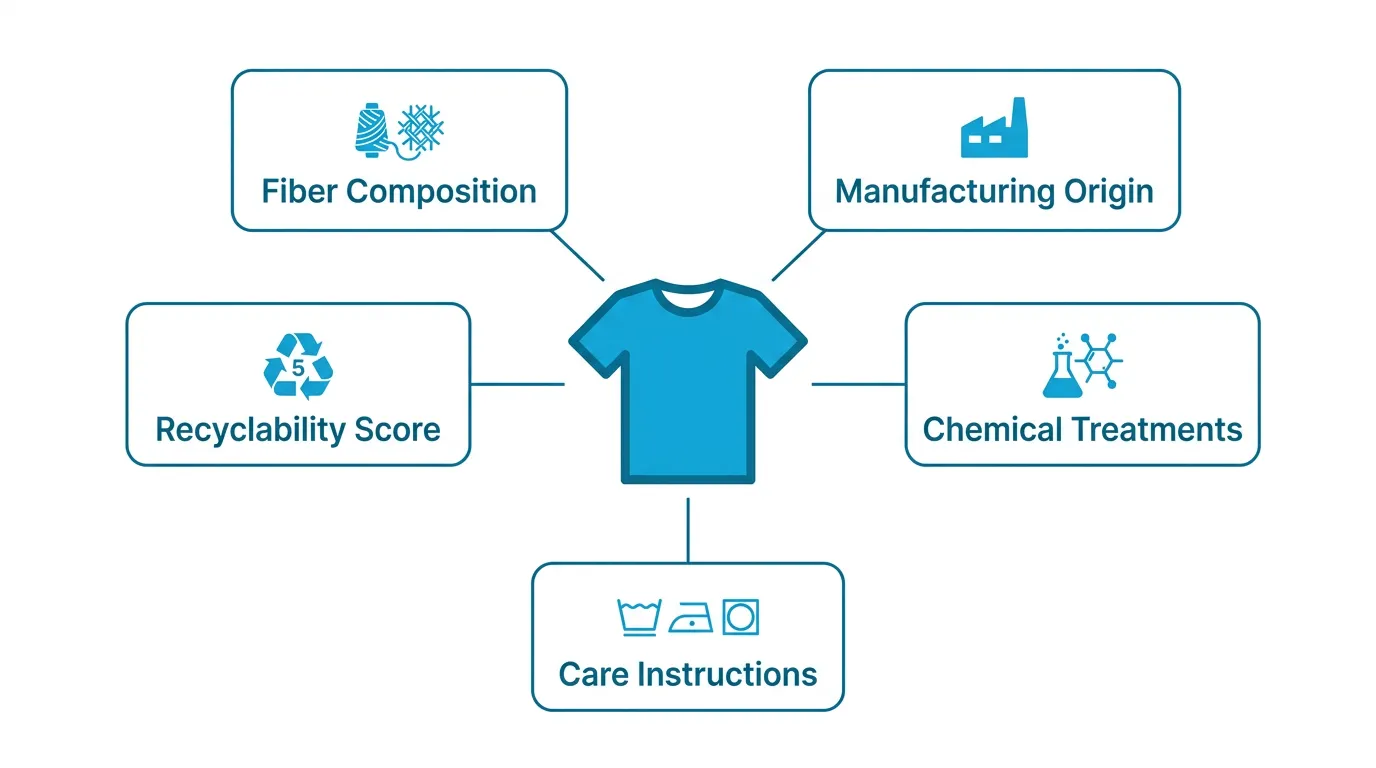
1. Fiber Composition and Material Information
Your DPP must provide detailed fiber composition going beyond traditional label requirements:
- Complete fiber breakdown (e.g., "65% Organic Cotton, 30% Recycled Polyester, 5% Elastane")
- Origin of raw materials (country of fiber production)
- Certification status (organic certifications, recycled content verification)
- Pre-consumer vs. post-consumer recycled content percentages
- Natural vs. synthetic fiber breakdown
- Presence of animal-derived materials (wool, leather, down, etc.)
This goes significantly beyond the existing label requirement to simply list fiber percentages. The DPP requires traceability back to fiber origin, which means you need robust supply chain documentation.
2. Manufacturing and Production Information
To combat exploitation and promote transparency, DPPs must disclose:
- Country of fabric production (where fibers were woven/knitted)
- Country of garment assembly (final manufacturing location)
- Dyeing and finishing locations
- Facility certifications (Fair Trade, SA8000, WRAP, etc.)
- Environmental management systems at production facilities
- Water and energy consumption data (where available)
For Shopify sellers working with manufacturers, this means requesting detailed documentation from your suppliers about their production processes and locations.
3. Chemical Treatments and Substance Information
In alignment with REACH (Registration, Evaluation, Authorization and Restriction of Chemicals) regulations, textile DPPs must declare:
- Dyes and colorants used
- Finishing treatments (water repellent coatings, flame retardants, anti-microbial treatments)
- Presence of substances of very high concern (SVHCs)
- Harmful chemical compliance (confirmation of REACH/CLP compliance)
- Allergen information (substances that may cause skin reactions)
- Microplastic shedding potential (for synthetic fabrics)
This requirement pushes the burden of chemical transparency upstream to manufacturers. Platforms like PassportPro can help you organize and present this technical data in consumer-friendly formats while maintaining regulatory compliance.
4. Care, Repair, and Durability Information
To promote longer product lifespans and reduce waste, DPPs must include:
- Comprehensive care instructions (washing, drying, ironing, dry cleaning)
- Expected product lifespan (wash cycles before degradation)
- Repair instructions and common repair needs
- Spare parts availability (replacement buttons, zippers, etc.)
- Warranty information and repair service contacts
- Alteration guidance (hemming, resizing options)
- Quality guarantees and expected performance metrics
This shifts the narrative from fast fashion's disposability culture toward durability and repairability, aligning with broader circular economy principles.
5. End-of-Life and Recycling Information
Perhaps the most transformative aspect of textile DPPs is the requirement to provide clear recycling pathways:
- Recycling viability (whether the product can be mechanically or chemically recycled)
- Preparation for recycling (removing non-textile components like buttons or zippers)
- Textile collection points (geographic-specific recycling resources)
- Downcycling vs. closed-loop recycling potential
- Composability (for 100% natural fiber products without chemical treatments)
- Take-back programs offered by the brand
This requirement recognizes that many textile products, particularly blended fabrics, cannot currently be recycled effectively. The DPP makes this reality transparent while incentivizing the industry to develop more recyclable products.
6. Social and Ethical Information
Beyond environmental data, textile DPPs will increasingly include social responsibility information:
- Living wage compliance at manufacturing facilities
- Worker safety certifications
- Gender equity policies in production facilities
- Child labor compliance verification
- Freedom of association (unionization rights)
- Auditing and verification (third-party social audits)
How Textile DPPs Differ from Existing Labeling Requirements
If you're already complying with existing EU textile labeling regulations, you might wonder what's actually new. The answer: nearly everything about scope, accessibility, and enforcement.
Traditional Textile Labels vs. Digital Product Passports
Traditional Fiber Content Labels (EU Regulation 1007/2011):
- Required on sewn-in physical labels
- Lists fiber composition percentages only
- No origin information required (except "Made in..." country of final assembly)
- Static information that degrades or is removed
- No care instruction enforcement (only recommendations)
- Limited enforcement mechanisms
Digital Product Passports for Textiles:
- Accessible via QR code or NFC technology
- Comprehensive data across environmental, social, and technical dimensions
- Full supply chain transparency required
- Permanent digital record throughout product lifecycle
- Machine-readable and standardized format
- Strong enforcement with market access conditioned on compliance
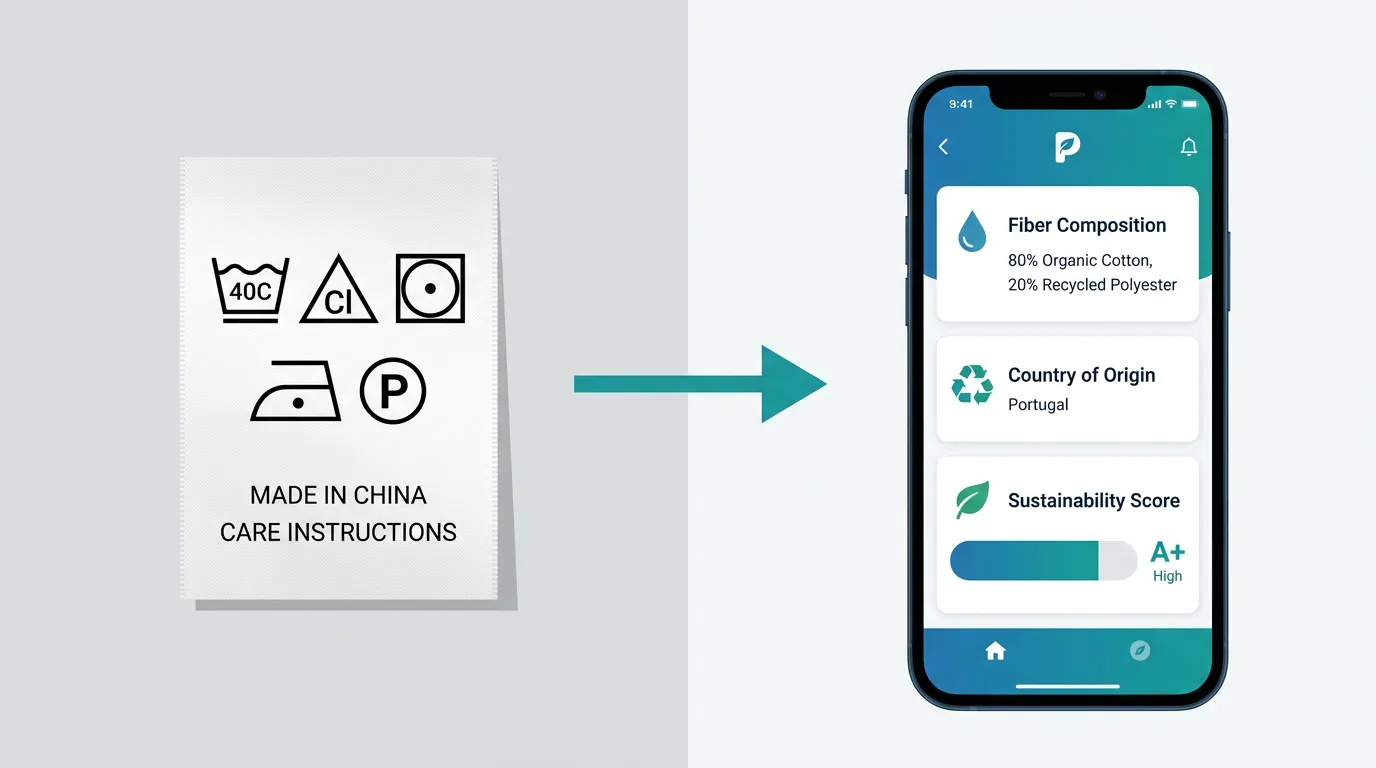
The DPP doesn't replace traditional labels—you'll still need sewn-in fiber content tags—but it dramatically expands what information must be available and how consumers access it.
Care Labels vs. DPP Care Information
Similarly, existing care label symbols (ISO 3758 standard) provide basic washing and drying instructions, but DPP care information goes much further:
- Expanded instructions: Not just washing symbols, but detailed guidance on extending product life
- Environmental impact data: Water and energy consumption of recommended care methods
- Alternative care methods: Professional cleaning vs. home care comparisons
- Digital updates: If care instructions change based on product testing, the DPP can be updated
The Role of DPPs in Combating Fast Fashion Waste
The EU's textile strategy explicitly targets the fast fashion business model, which relies on cheap, disposable clothing designed for short-term use. Digital Product Passports serve as a powerful counter-force to this model in several ways.
Creating Transparency Around True Costs
Fast fashion's low prices are enabled by externalized environmental and social costs: pollution, waste, exploitative labor, and resource depletion. By requiring disclosure of production conditions, material origins, and environmental impacts, DPPs make these hidden costs visible.
When consumers can see that a five-euro t-shirt was produced in a facility without environmental certifications, using virgin polyester from fossil fuels, with no recycling pathway, the true cost becomes apparent. This informed transparency creates market pressure for more sustainable practices.
Incentivizing Durability Over Disposability
The requirement to disclose expected product lifespan and quality metrics fundamentally changes competitive dynamics. Brands can no longer compete solely on price; they must also compete on longevity and quality.
A garment designed to last 100 wash cycles with readily available repair options will be more attractive to increasingly conscious consumers than one expected to degrade after 20 washes. This shifts fashion industry incentives toward quality, repairability, and timeless design.
Enabling Circular Business Models
DPPs provide the information infrastructure necessary for circular economy business models:
- Resale and second-hand markets: Complete product history enables confident second-hand purchases
- Rental and subscription services: Product quality and care information supports rental models
- Repair and alteration services: Detailed repair guidance creates market opportunities for repair businesses
- Textile-to-textile recycling: Material composition data enables effective recycling sorting
By making products "knowable" throughout their lifecycle, DPPs unlock value in circular models that fast fashion's opacity prevented.
Which Sellers Are Affected?
The question of jurisdiction can be complex, but the basic principle is clear: if you place textile products on the EU market, you're subject to DPP requirements. This applies regardless of where your business is located.
Shopify Sellers Subject to Textile DPP Requirements
You need to comply if:
- You sell textile products directly to EU consumers through your Shopify store
- You use Fulfillment by Amazon (FBA) or similar services that store inventory in EU warehouses
- You sell wholesale to EU retailers who will resell your products to consumers
- You operate EU-specific domains or market specifically to EU customers
- You ship products to EU addresses, even if your business is based elsewhere
The responsible party:
- Manufacturers placing their own branded products on the EU market
- Importers bringing non-EU manufactured products into the EU
- Authorized representatives designated by non-EU manufacturers
- Brands whose name appears on the product, even if manufactured by third parties
If you private label products sourced from manufacturers, you'll typically be considered the economic operator responsible for DPP compliance, even if you didn't manufacture the items yourself.
Small Business Considerations
The EU recognizes that compliance burdens can disproportionately affect small businesses. While specific small business exemptions for textile DPPs haven't been finalized, the European Commission has indicated:
- Simplified compliance pathways for micro-enterprises (fewer than 10 employees)
- Extended transition periods for small manufacturers
- Industry-wide solutions to reduce individual company burdens
- Template and toolkit availability for smaller operators
However, these accommodations likely won't constitute full exemptions. If you sell textiles to EU customers, plan to comply regardless of business size.
Practical Steps for Shopify Fashion Merchants to Prepare
The timeline for textile DPP compliance may seem distant, but the preparation required is substantial. Starting now positions you ahead of competitors and prevents last-minute scrambling.
Step 1: Audit Your Current Product Data
Begin by assessing what information you currently have and what you're missing:
Create a data inventory:
- Review existing product labels and packaging
- Collect any supplier documentation you have
- Identify data gaps for each DPP requirement category
- Document your current supply chain (who you buy from, where products are made)
Most fashion sellers discover significant gaps in their current data, particularly around:
- Fiber origin (beyond final manufacturing country)
- Chemical treatments and substance information
- Energy and water usage in production
- End-of-life recycling pathways
- Social compliance certifications
Step 2: Engage Your Supply Chain
DPP compliance is impossible without cooperation from your manufacturers and suppliers. Start these conversations early:
Contact your manufacturers:
- Explain the upcoming EU requirements and your need for detailed information
- Request production facility certifications and environmental data
- Ask about chemical treatments, dyeing processes, and finishing procedures
- Inquire about their own audit and compliance processes
- Discuss whether they can provide DPP-ready data for products
Set supplier expectations:
- Make DPP data provision a requirement for future orders
- Consider supply chain audits to verify provided information
- Build long-term relationships with transparent, compliant suppliers
- Be prepared to pay premium for suppliers who provide comprehensive data
Some manufacturers, particularly in countries like Bangladesh, China, and Vietnam where much textile production occurs, are already adapting to these requirements. Others may be unfamiliar with DPPs and require education.
Step 3: Evaluate Technology Solutions
Manual DPP compliance is theoretically possible but practically untenable for most businesses. Technology platforms designed for DPP management are emerging as essential tools.
PassportPro, designed specifically for Shopify merchants, offers:
- Product data collection workflows tailored to textile-specific requirements
- Supplier data integration and verification
- QR code generation and management
- Consumer-facing passport interfaces optimized for fashion products
- Compliance tracking and update notifications
- Multi-language support for EU markets
When evaluating DPP solutions, prioritize platforms that:
- Understand the specific textile data requirements
- Integrate seamlessly with your Shopify store
- Support scalability as regulations evolve
- Provide consumer-friendly interfaces (technical compliance alone isn't sufficient)
- Offer ongoing compliance monitoring and updates
Step 4: Redesign Packaging and Product Presentation
Your DPP will be accessed through QR codes or NFC tags on product packaging or labels. This requires thoughtful design integration:
QR code placement:
- Include on hang tags, sewn-in labels, or packaging inserts
- Ensure sufficient size (minimum 2cm x 2cm) for reliable scanning
- Provide accompanying text explaining the DPP purpose
- Consider aesthetic integration with your brand design
Consumer communication:
- Educate customers about what DPPs are and why they matter
- Frame transparency as a brand value and competitive differentiator
- Use DPP implementation as a marketing opportunity
Many brands are discovering that DPP transparency resonates with conscious consumers willing to pay premium for verifiable sustainability.
Step 5: Develop Internal Processes for Ongoing Compliance
DPP compliance isn't a one-time project; it requires ongoing data management:
Create systems for:
- Collecting supplier data for each new product line
- Updating DPP information when production changes occur
- Verifying accuracy of supplier-provided data
- Managing multiple product versions and SKUs
- Archiving DPP data for products no longer sold (required retention periods apply)
Assign responsibility:
- Designate a compliance officer or team responsible for DPP management
- Train staff on data collection and entry procedures
- Establish vendor management protocols that include DPP requirements
Step 6: Monitor Regulatory Developments
The textile DPP landscape is still evolving, with final technical specifications being refined:
Stay informed about:
- Publication of final delegated acts for textiles
- Technical standards for data formatting and exchange
- Enforcement timelines and transition periods
- Industry guidance documents and compliance tools
- Penalties for non-compliance
Industry associations like the European Apparel and Textile Confederation (EURATEX) and national fashion councils are providing updates and advocacy. Engage with these organizations or work with compliance partners who monitor developments on your behalf.
Looking Ahead: The Future of Fashion Transparency
The EU's textile DPP requirements represent the most significant regulatory intervention in fashion industry practices in decades. While compliance may seem burdensome, these requirements are driving overdue transformation toward sustainability and ethics.
Competitive Advantages of Early Adoption
Brands that embrace DPP requirements early, even before enforcement deadlines, gain several advantages:
Consumer trust and loyalty: Transparency builds confidence, particularly among younger consumers who prioritize sustainability Supply chain resilience: Deep knowledge of your supply chain reduces risk and improves quality control Regulatory readiness: Avoiding last-minute compliance rushes and potential market access issues Innovation opportunities: DPP data reveals opportunities for product improvements and circular business models Brand differentiation: Standing out in a crowded market through verifiable sustainability claims
Global Influence of EU Standards
The EU's regulatory approach often sets global precedents through what's called the "Brussels Effect." Companies that sell globally frequently adopt EU standards as their baseline to avoid managing multiple compliance regimes.
Textile DPP requirements are likely to influence:
- Similar regulations in other markets (UK, California, Australia)
- Voluntary industry standards exceeding EU minimums
- Consumer expectations worldwide for product transparency
- Technology standards for digital product information
Preparing for EU textile DPP compliance positions your business for these broader market shifts.
Conclusion: Turning Compliance into Opportunity
The EU Textile Strategy's Digital Product Passport requirements are fundamentally reshaping the fashion industry. For Shopify merchants selling apparel, footwear, and textile products to EU customers, compliance is not optional—it's a prerequisite for market access.
The data requirements are comprehensive: fiber composition and origin, manufacturing locations, chemical treatments, care and repair information, recycling pathways, and social compliance data. This represents a quantum leap beyond existing labeling requirements, demanding deep supply chain engagement and robust data management systems.
Yet within this compliance challenge lies significant opportunity. Brands that embrace transparency, invest in supply chain knowledge, and communicate their sustainability story through DPPs can differentiate themselves in an increasingly conscious marketplace.
The time to prepare is now. Begin with a data audit, engage your suppliers, evaluate technology solutions like PassportPro that simplify compliance, and redesign your packaging to integrate digital passports seamlessly. The fashion industry's future is transparent—and those who lead the transition will be best positioned for success.
The garments we wear tell stories. Digital Product Passports ensure those stories are honest, complete, and worthy of the trust conscious consumers place in the brands they choose.
Ready to get started?
Create EU-compliant Digital Product Passports for your Shopify store in minutes.
Install PassportPro on Shopify