EU Green Claims Directive Explained: How DPPs Protect Your Brand from Penalties
The days of vague environmental promises are over. The EU Green Claims Directive, formally adopted in 2024, represents one of the most significant shifts in how brands can communicate about sustainability. If you're selling products in the European Union and using terms like "eco-friendly," "sustainable," or "climate neutral" in your marketing, you need to understand this legislation immediately.
This isn't just another regulatory checkbox. Brands across Europe are already facing substantial fines, product bans, and severe reputational damage for failing to substantiate their environmental claims. The good news? Digital Product Passports (DPPs) offer a powerful solution to meet these requirements while actually strengthening your brand positioning.
What Is the EU Green Claims Directive?
The Green Claims Directive (officially the "Directive on substantiation and communication of explicit environmental claims") is EU legislation adopted in March 2024 that establishes strict rules for any environmental claim made by companies operating in EU markets. It works in tandem with the broader Ecodesign for Sustainable Products Regulation (ESPR) to combat greenwashing and ensure consumers can trust environmental marketing.
Key Provisions
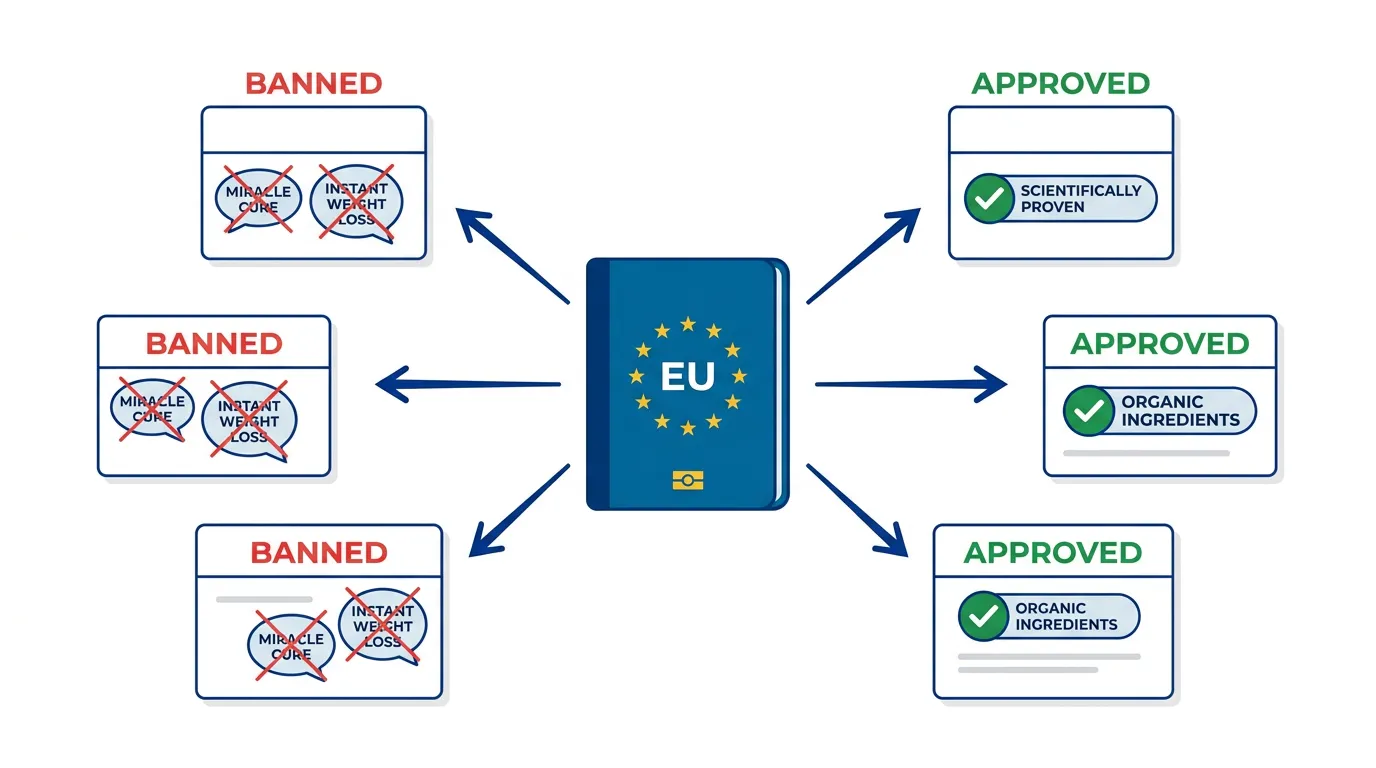
The directive establishes several core requirements:
- Pre-approval requirement: Environmental claims must be verified by an independent third party before they appear in marketing materials
- Scientific substantiation: All claims must be backed by verifiable scientific evidence using recognized assessment methods
- Accessibility: Supporting evidence must be made publicly accessible to consumers and enforcement authorities
- Life-cycle perspective: Claims must consider the full environmental impact of products, not cherry-picked benefits
- No offsetting loopholes: Carbon offset credits cannot be used to support claims of carbon neutrality without explicit disclosure
The directive specifically targets both explicit claims (direct statements about environmental performance) and environmental labels (symbols, logos, or certifications suggesting environmental benefits).
Timeline for Enforcement
Understanding when these rules take effect is critical for planning:
- March 2024: Directive formally adopted by the European Parliament
- 2026: Member states must transpose the directive into national law
- 2027: Enforcement begins across all EU member states
- 2028: Full compliance expected, including retroactive review of existing claims
While full enforcement doesn't begin until 2027, many national consumer protection authorities are already taking action against misleading environmental claims under existing consumer protection laws. Waiting until the deadline puts your brand at significant risk.
What Counts as a "Green Claim"?
This is where many brands get tripped up. The directive defines green claims extremely broadly:
Explicit Environmental Claims
Any statement, whether in text, images, or symbols, suggesting environmental benefits, including:
- Product-level claims: "Made from recycled materials," "Biodegradable," "Carbon neutral"
- Company-level claims: "Our business is climate neutral," "We offset all our emissions"
- Process claims: "Sustainably sourced," "Produced with renewable energy"
- Comparative claims: "Greener than competitor X," "More sustainable alternative"
What About Vague Terms?
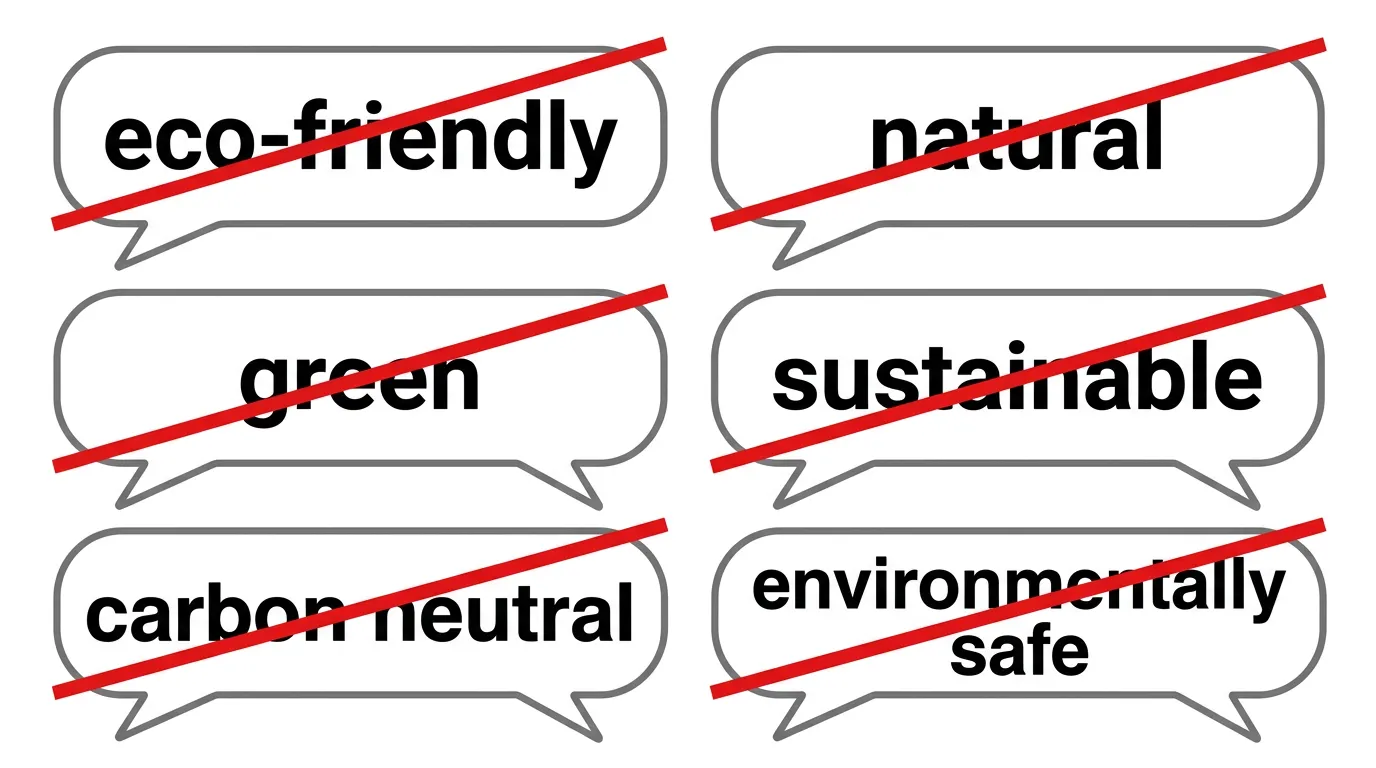
Here's where the directive gets strict. Banned vague terms include:
- "Eco-friendly"
- "Sustainable"
- "Green"
- "Natural"
- "Climate neutral"
- "Carbon neutral"
- "Environmentally friendly"
- "Conscious"
- "Responsible"
These terms are only allowed if accompanied by specific, verifiable evidence explaining exactly what the claim means and how it was substantiated. You cannot simply slap "eco-friendly" on a product description anymore.
Evidence Requirements: What You Need to Prove
The directive doesn't just say "provide evidence." It specifies exactly what kind of substantiation is required:
Scientific Assessment Methods
Claims must be based on:
- Life Cycle Assessment (LCA): Comprehensive analysis of environmental impacts from raw material extraction through end-of-life
- Internationally recognized standards: ISO 14040/14044 for LCA, ISO 14020 series for environmental labels
- Primary data: Where possible, use actual data from your supply chain rather than industry averages
- Third-party verification: Independent auditors must review and approve claims before publication
Required Documentation
You must maintain and make available:
- Complete methodology explaining how the claim was calculated
- All underlying data sources
- Assumptions made and their justification
- System boundaries (what was included/excluded in the assessment)
- Verification reports from independent third parties
- Information about the verifying body's qualifications
This documentation must be publicly accessible and provided to consumers upon request within 30 days.
Penalties for Violations: What You're Risking
The consequences for non-compliance are severe and getting stricter:
Financial Penalties
While specific fine amounts are set by individual member states, the directive establishes minimum standards:
- Fines up to 4% of annual turnover in the affected member state
- Per-violation penalties: Each misleading claim can trigger a separate fine
- Administrative costs: Investigations and enforcement actions can cost tens of thousands in legal fees
Product-Level Consequences
Beyond fines, enforcement authorities can:
- Order immediate removal of all marketing materials containing unsubstantiated claims
- Ban products from sale until claims are corrected
- Require corrective advertising at your expense to inform consumers of misleading claims
- Mandate product recalls in severe cases
Reputational Damage
Perhaps most damaging:
- Public naming: Enforcement actions are publicly reported, creating negative press
- Loss of consumer trust: 73% of EU consumers say they would stop buying from brands caught greenwashing
- Retailer de-listing: Major retailers are increasingly refusing to carry products with unsubstantiated claims
- Investor concerns: ESG-focused investors view greenwashing violations as material risks
Real Examples: Brands Already Penalized
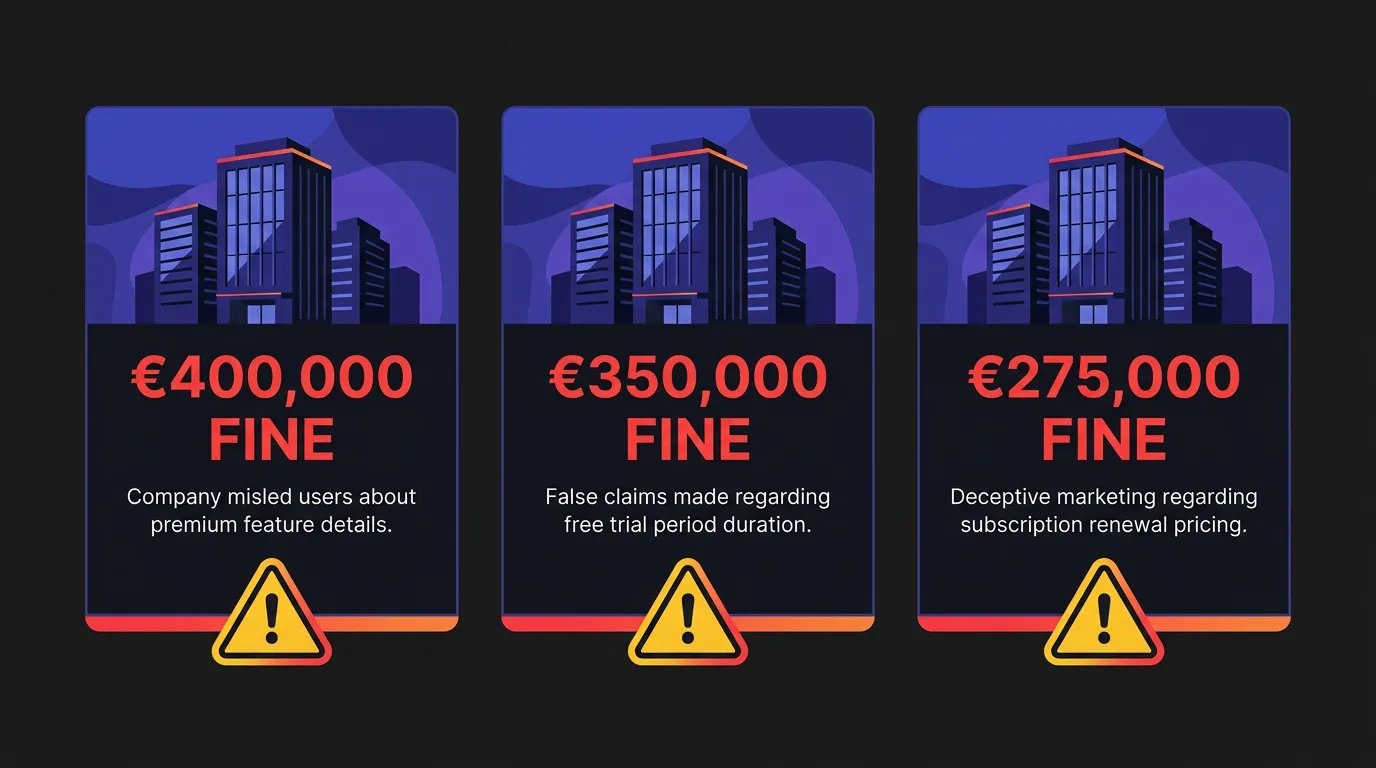
The directive may be new, but enforcement against greenwashing isn't. Recent cases illustrate what's at stake:
H&M – "Conscious Collection" (2022)
The fashion giant faced investigations in multiple EU countries for its "Conscious Collection" label. The issue? The collection wasn't significantly more sustainable than regular products, and environmental scores were based on misleading metrics. H&M removed the scorecards and settled with authorities.
Nestlé and Danone – Plastic Neutrality Claims (2023)
Both companies faced enforcement action for "plastic neutral" claims based on offset programs. French authorities ruled these claims misleading because they implied products contained less plastic, when in reality the companies were simply funding plastic removal projects elsewhere.
Volkswagen – Carbon Neutral Claims (2023)
VW's "carbon neutral" vehicle claims faced scrutiny because they only accounted for production emissions, not the full lifecycle including fuel consumption. German authorities required substantial revisions to marketing materials.
Ryanair – "Lowest Emissions Airline" (2024)
Facing investigations in multiple countries for claiming to be Europe's "greenest" airline without adequate substantiation comparing per-passenger emissions across all routes and aircraft types.
These aren't small operations—they're global brands with extensive legal teams. If they can face enforcement, any brand is vulnerable.
DPPs as Your Evidence Locker
This is where Digital Product Passports become essential. A properly implemented DPP doesn't just help you comply with the Green Claims Directive—it creates a robust, auditable evidence trail that actually strengthens your sustainability positioning.
What DPPs Provide
A comprehensive DPP includes:
Product-Specific Data
- Material composition with supplier documentation
- Manufacturing location and energy sources
- Transportation modes and distances
- Packaging materials and end-of-life instructions
Environmental Metrics
- Carbon footprint calculations with methodology
- Water usage data
- Waste generation and recycling rates
- Chemical content and compliance declarations
Supply Chain Transparency
- Tier 1, 2, and 3 supplier information
- Certifications (FSC, GOTS, Fair Trade, etc.)
- Audit reports and compliance documentation
- Third-party verification records
Verification Trail
- Who verified each data point and when
- Links to full assessment reports
- Updates and corrections over time
- Consumer access logs for accountability
How PassportPro Makes This Manageable
For Shopify merchants, managing this level of documentation manually is nearly impossible. This is exactly why solutions like PassportPro exist—to centralize all your product sustainability data in DPP format that automatically meets Green Claims Directive requirements.
PassportPro allows you to:
- Store all environmental claims evidence in one place
- Link marketing claims directly to supporting data
- Generate consumer-facing DPPs with full traceability
- Update information as your supply chain evolves
- Demonstrate compliance to enforcement authorities instantly
The platform essentially creates your "evidence locker"—everything you need to substantiate every green claim, accessible to consumers and regulators alike.
Practical Checklist: Auditing Your Marketing Copy
Ready to ensure compliance? Follow this systematic approach:
Step 1: Inventory All Environmental Claims
Review every customer touchpoint:
- Product descriptions on your Shopify store
- Homepage and landing pages
- Email marketing campaigns
- Social media posts and ads
- Product packaging
- Third-party marketplace listings (Amazon, Etsy, etc.)
- Influencer marketing materials
- Press releases and media kits
Create a spreadsheet listing every environmental claim you currently make.
Step 2: Substantiate or Remove
For each claim, ask:
- Do we have scientific evidence? If not, remove the claim immediately.
- Is the evidence based on life-cycle assessment? If it only looks at one stage (e.g., "recycled packaging" but ignoring production emissions), the claim is incomplete.
- Has it been third-party verified? Self-assessed claims won't pass muster.
- Is it specific and measurable? Vague terms must be eliminated or made specific.
Step 3: Build Your Evidence Base
For claims you want to keep:
- Conduct or commission proper Life Cycle Assessments
- Gather supplier documentation for all material claims
- Obtain third-party verification from accredited bodies
- Document your methodology and assumptions
- Create consumer-accessible summaries of your evidence
This is time-consuming but essential. A DPP platform dramatically reduces the workload.
Step 4: Rewrite Claims with Specificity
Transform vague claims into specific, substantiated ones:
Before: "Our eco-friendly cotton t-shirt" After: "Our organic cotton t-shirt (GOTS-certified) has a 62% lower carbon footprint than conventional cotton according to our Life Cycle Assessment (view full report)"
Before: "Sustainable packaging" After: "Packaging made from 100% recycled cardboard (FSC-certified) that is fully recyclable in municipal systems"
Before: "Carbon neutral product" After: "This product's manufacturing emissions (2.3 kg CO₂e, verified by [Third Party]) are offset through [specific project], with offsets retired in your name (view certificate)"
Step 5: Make Evidence Accessible
The directive requires evidence to be available to consumers:
- Create dedicated webpage for each major environmental claim
- Link to full LCA reports and verification certificates
- Include evidence access in your DPP QR codes
- Train customer service teams to handle evidence requests
- Establish 30-day response process for formal requests
Step 6: Establish Ongoing Governance
Compliance isn't one-time:
- Designate a compliance owner responsible for green claims
- Create approval process requiring legal/compliance review before any environmental claim goes live
- Schedule annual audits of all environmental claims
- Update evidence as products, suppliers, or methodologies change
- Monitor enforcement actions in your industry to stay ahead of evolving standards
The Strategic Advantage of Proactive Compliance
While this article focuses on avoiding penalties, there's a significant upside to getting ahead of the Green Claims Directive.
Brands that substantiate claims properly:
- Build genuine consumer trust: 82% of EU consumers say they're more likely to buy from brands that provide transparent sustainability data
- Command premium pricing: Products with verified environmental benefits can support 10-15% higher price points
- Future-proof operations: As regulations continue tightening, early adopters have operational advantages
- Attract better partnerships: Retailers increasingly require sustainability substantiation before onboarding new brands
- Improve actual sustainability: The process of gathering evidence often reveals real opportunities for environmental improvements
Your Next Steps
The EU Green Claims Directive represents a fundamental shift in how brands communicate about sustainability. The era of vague, feel-good environmental marketing is over—and that's ultimately good for consumers, the planet, and honest brands.
Immediate actions to take today:
- Audit your marketing: Review every environmental claim you're currently making
- Identify gaps: Determine which claims lack proper substantiation
- Begin evidence collection: Start gathering supplier documentation and commissioning LCAs where needed
- Implement a DPP solution: Tools like PassportPro provide the infrastructure to manage compliance efficiently
- Revise messaging: Update claims to be specific and verifiable, linked to your evidence base
The brands that will thrive under these new rules are those that view compliance not as a burden but as an opportunity—to build deeper trust, differentiate on the basis of verified sustainability performance, and establish operational advantages that will compound over time.
The Green Claims Directive isn't just about avoiding penalties. It's about building the kind of transparent, evidence-based sustainability practices that the market is increasingly demanding. DPPs are your tool to make that happen—turning regulatory compliance into competitive advantage.
Need help implementing Digital Product Passports that meet Green Claims Directive requirements? PassportPro provides Shopify merchants with turnkey DPP solutions that centralize sustainability data, verify environmental claims, and create consumer-accessible transparency. Learn more about protecting your brand while strengthening your sustainability positioning.
Ready to get started?
Create EU-compliant Digital Product Passports for your Shopify store in minutes.
Install PassportPro on Shopify