What Is a Digital Product Passport? The Complete Guide for E-Commerce
If you're an e-commerce merchant selling products to European customers, you've likely heard whispers about Digital Product Passports (DPPs)—a revolutionary new requirement that's changing the landscape of online retail. But what exactly are they, and why should you care?
In this comprehensive guide, we'll demystify Digital Product Passports, explain why they're becoming mandatory in the EU, and show you how they can actually benefit your business beyond mere compliance.
What Is a Digital Product Passport?
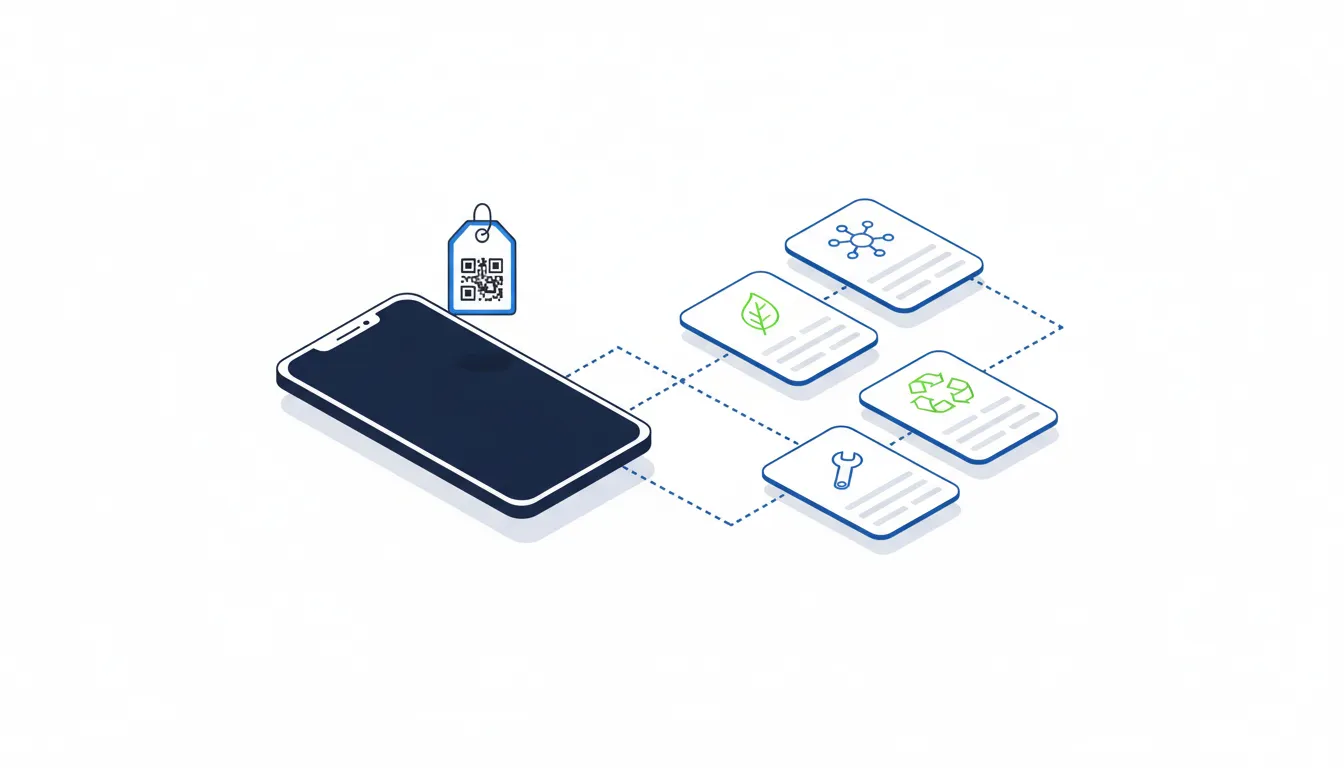
A Digital Product Passport (DPP) is a digital record containing comprehensive information about a product's lifecycle, from raw material sourcing through manufacturing, use, and end-of-life disposal. Think of it as a detailed biography of your product—accessible to anyone who scans a QR code or taps an NFC chip.
Unlike traditional product labels that provide minimal information, a DPP offers a complete, transparent view of:
- Material composition: What the product is made from, including recycled content percentages
- Environmental impact: Carbon footprint, water usage, and other sustainability metrics
- Manufacturing details: Where and how the product was made
- Repairability information: How to fix the product and where to get spare parts
- Recycling instructions: How to properly dispose of or recycle the product at end-of-life
- Supply chain transparency: Traceability of key materials and ethical compliance
The DPP is typically accessed through a data carrier—most commonly a QR code placed on the product, packaging, or product label. When scanned with a smartphone, the QR code directs users to a web interface displaying all passport information in an organized, user-friendly format.
Why Did the EU Create the DPP Requirement?
The European Union introduced Digital Product Passports as a cornerstone of its Ecodesign for Sustainable Products Regulation (ESPR), part of the broader European Green Deal initiative to make Europe the first climate-neutral continent by 2050.
The Problem: Linear Economy Failures
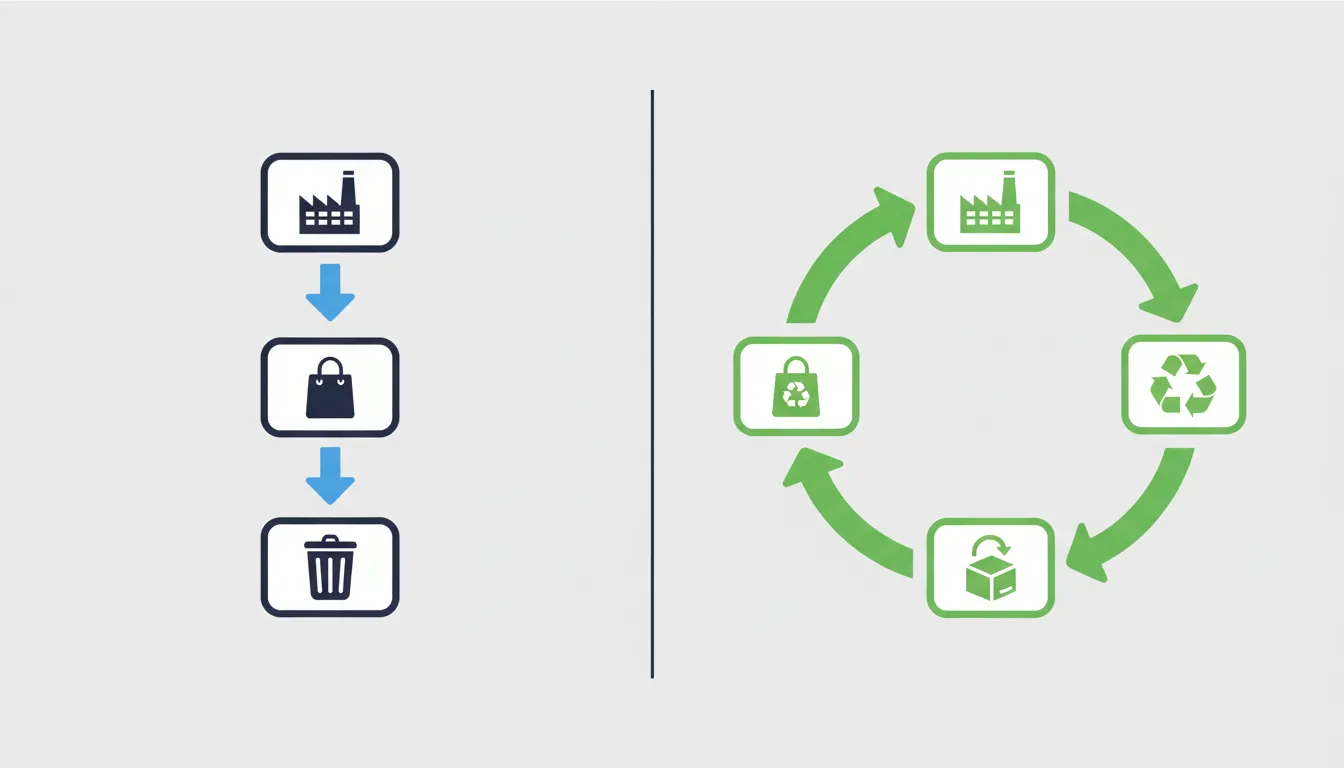
Our current "take-make-dispose" economy has created massive environmental challenges:
- Resource depletion: We're consuming finite resources faster than they can be replenished
- Waste crisis: Mountains of products end up in landfills because recycling is difficult or impossible
- Information gap: Consumers and recyclers lack information needed to make sustainable choices
- Greenwashing: Vague environmental claims make it hard to verify genuine sustainability
- Planned obsolescence: Products often can't be repaired, forcing premature replacement
The Solution: Circular Economy Through Transparency
Digital Product Passports address these challenges by:
- Enabling informed decisions: Consumers can compare products based on actual environmental data, not marketing claims
- Facilitating repair: Clear information and spare parts availability extend product lifespans
- Improving recycling: Detailed material composition helps recyclers recover valuable materials
- Preventing greenwashing: Standardized, verifiable data replaces vague sustainability claims
- Driving improvement: Transparency incentivizes manufacturers to improve environmental performance
By making product information transparent, accessible, and standardized, the EU aims to accelerate the transition to a circular economy where products are designed for longevity, repairability, and recyclability from the outset.
What Information Does a Digital Product Passport Contain?
While specific requirements vary by product category, most Digital Product Passports include these core information categories:
Product Identification
- Unique product identifier (like a serial number)
- Manufacturer name and contact information
- Brand and model number
- Date and country of manufacture
- Batch or lot numbers
Material and Substance Information
- Complete list of materials used and their percentages
- Presence of substances of concern or hazardous materials
- Recycled content percentage
- Critical raw materials used
- Biodegradable or compostable components
Environmental Performance Data
- Carbon footprint: Total greenhouse gas emissions from production
- Energy efficiency: Power consumption ratings and comparisons
- Water footprint: Water used in manufacturing
- Certifications: Environmental standards met (e.g., EU Ecolabel, Energy Star)
- Life cycle assessment: Environmental impact across product lifetime
Circularity and Durability Information
- Expected lifespan: How long the product should last under normal use
- Repairability score: Ease of repair rated on standardized scale
- Repair instructions: Manuals and guides for common repairs
- Spare parts: Availability, ordering information, and guaranteed availability period
- Upgrade options: Possibilities for product improvement or component replacement
End-of-Life Guidance
- Disassembly instructions for recycling
- Proper disposal methods
- Take-back or return programs
- Recyclable material percentages
- Recycling facilities or programs available
Supply Chain Transparency
- Origin of key materials (e.g., conflict minerals)
- Social compliance certifications (fair labor practices)
- Traceability information for critical components
- Transportation and logistics environmental impact
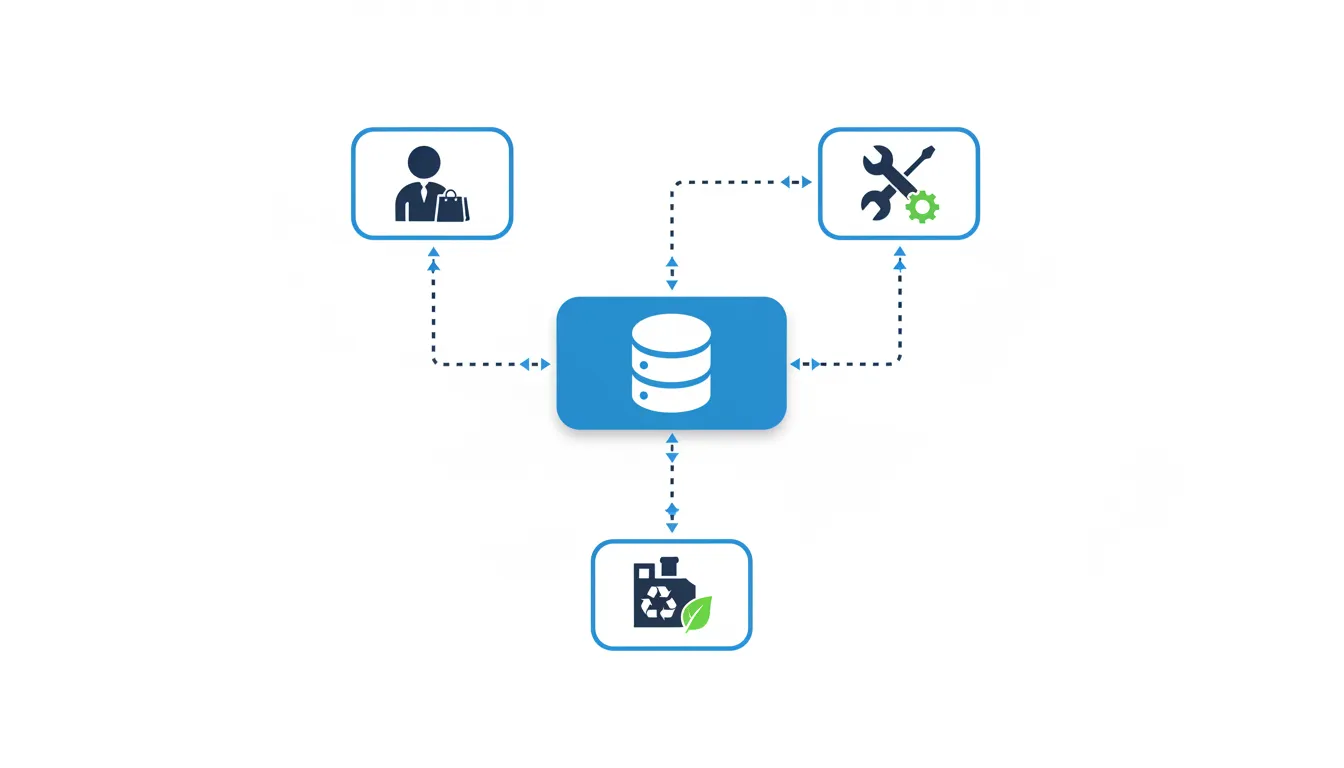
This wealth of information empowers every stakeholder—consumers, repair professionals, recyclers, and regulators—to make better decisions about products.
How Digital Product Passports Work Technically
The technical infrastructure supporting DPPs is designed to be accessible while ensuring data security and authenticity.
Data Carriers: Access Points
The most common methods for accessing a DPP are:
- QR Codes: Two-dimensional barcodes printed on products or packaging that link to the DPP when scanned with a smartphone camera
- NFC Tags: Near-Field Communication chips embedded in products that transmit data when tapped with NFC-enabled devices
- RFID Tags: Radio-frequency identification chips that can be scanned by specialized readers
- Digital Watermarks: Invisible codes embedded in product designs or labels
QR codes are the most popular choice for e-commerce due to their low cost, easy implementation, and universal smartphone compatibility.
Data Storage and Display
DPP information can be stored and displayed through:
- Centralized databases: Government or industry-run repositories
- Distributed systems: Blockchain or decentralized networks for enhanced security
- Manufacturer-hosted platforms: Brand-managed websites and servers
- Third-party platforms: Specialized DPP service providers (like PassportPro)
When a customer scans a QR code, they're directed to a web interface that displays the passport information in a structured, easy-to-navigate format optimized for mobile devices.
Data Standards and Interoperability
The EU is establishing common data standards to ensure DPPs are:
- Interoperable: Readable by different systems and platforms
- Machine-readable: Usable by automated systems and artificial intelligence
- Secure: Protected against tampering and unauthorized modification
- Auditable: Changes tracked and verifiable by authorities
- Persistent: Available throughout product lifetime and beyond
Benefits of Digital Product Passports for E-Commerce Merchants
While DPPs are initially driven by regulatory compliance, they offer substantial business benefits:
Build Customer Trust and Loyalty
Modern consumers demand transparency. Studies show that 73% of consumers are willing to pay more for products with complete transparency about sourcing and sustainability. By providing comprehensive product information, you demonstrate integrity and build deeper customer relationships.
Differentiate From Competitors
In crowded markets, sustainability is a powerful differentiator. Merchants who adopt DPPs early position themselves as industry leaders and attract environmentally conscious customers who actively seek out transparent brands.
Reduce Return Rates
Clear, detailed product information helps customers make better purchasing decisions, reducing returns caused by mismatched expectations or unclear product specifications.
Enhance Brand Reputation
Transparency showcases your commitment to ethical business practices and environmental responsibility, enhancing brand image and earning positive media coverage and customer advocacy.
Access New Market Opportunities
Some retailers and marketplaces are beginning to prioritize or exclusively feature products with Digital Product Passports, opening doors to new distribution channels.
Improve Supply Chain Management
Creating DPPs requires deep knowledge of your supply chain, which often reveals inefficiencies, risks, or improvement opportunities you weren't aware of.
Future-Proof Your Business
DPP requirements will only expand. Implementing them now means you're prepared for future regulations rather than scrambling to catch up.
Command Premium Pricing
Products with verified sustainability credentials and complete transparency can justify higher price points, as customers increasingly view sustainability as a form of quality.
Industries Affected First: Textiles, Electronics, and Batteries
The EU is rolling out DPP requirements in phases, prioritizing industries with the highest environmental impact:
Batteries and Accumulators (2025)
First to require DPPs, batteries used in everything from smartphones to electric vehicles must include information on capacity, performance, durability, chemical composition, and recycling instructions.
Textiles and Fashion (2026)
Clothing, footwear, and home textiles will need DPPs covering fiber composition, water and chemical use, repairability, and recycling options. This addresses fashion's massive environmental footprint.
Electronics (2027)
Smartphones, tablets, laptops, and household appliances will require passports detailing materials (especially critical raw materials), energy efficiency, repairability scores, and software update commitments.
Additional Categories
Future phases will expand to furniture, construction materials, chemicals, cosmetics, toys, and ultimately most physical products sold in the EU.
Even if your products aren't in the first wave, preparing now ensures you're not caught off guard when requirements expand to your category.
Getting Started With Digital Product Passports
Ready to implement DPPs for your e-commerce business? Here's how to begin:
Step 1: Audit Your Products
Identify which products you sell that fall under current or upcoming DPP requirements. Prioritize high-volume products or those in regulated categories.
Step 2: Gather Product Data
Work with your suppliers and manufacturers to collect the information needed for passports. This is often the most time-consuming step, so start early.
Step 3: Choose a DPP Platform
Select a Digital Product Passport solution that meets your needs. Look for:
- E-commerce integration: Seamless connection with your Shopify or other platform
- Compliance expertise: Up-to-date with evolving EU requirements
- User-friendly interface: Easy for your team to use
- Customer experience: Professional, mobile-optimized passport displays
- Scalability: Can grow with your business
Step 4: Create Your First Passports
Use your chosen platform to create Digital Product Passports, inputting all required information and generating QR codes.
Step 5: Integrate With Product Pages
Add QR codes to product packaging and display passport information or badges on your e-commerce product pages to highlight your transparency.
Step 6: Communicate the Value
Don't hide your DPPs—promote them. Tell customers about your commitment to transparency and help them understand how to access and use passport information.
Step 7: Maintain and Update
DPPs are living documents. Update them as products change, new data becomes available, or regulations evolve.
Conclusion: Embrace the Transparency Revolution
Digital Product Passports represent more than a regulatory requirement—they're a fundamental shift toward transparency, sustainability, and consumer empowerment in e-commerce. While the transition requires effort, merchants who embrace DPPs early will reap rewards in customer trust, market differentiation, and long-term business resilience.
The question isn't whether Digital Product Passports will become standard practice—they will. The question is whether you'll lead the change or struggle to catch up.
Ready to create your first Digital Product Passport? Platforms like PassportPro make it simple to get started, even if you have thousands of products. The sustainable commerce revolution is here—make sure you're part of it.
Ready to get started?
Create EU-compliant Digital Product Passports for your Shopify store in minutes.
Install PassportPro on Shopify