EU Battery Regulation 2025: Complete Compliance Guide for Online Sellers
EU Battery Regulation 2025: Complete Compliance Guide for Online Sellers
The European Union's Battery Regulation (EU) 2023/1542 represents a watershed moment for e-commerce merchants selling battery-powered products. As the first product category to mandate Digital Product Passports (DPPs) under the EU's broader Ecodesign for Sustainable Products Regulation (ESPR), batteries are setting the standard for product transparency and circular economy practices across Europe.
If you sell power banks, electronics with rechargeable batteries, e-bike batteries, or any battery-powered products to EU customers, this regulation will fundamentally change how you document, label, and market your products. Non-compliance could result in products being blocked at customs, hefty fines, and loss of market access.
This comprehensive guide explains everything you need to know about the EU Battery Regulation, its Digital Product Passport requirements, critical deadlines, and how to ensure compliance.

What Is the EU Battery Regulation?
The EU Battery Regulation (Regulation (EU) 2023/1542), which entered into force on August 17, 2023, establishes comprehensive sustainability requirements for batteries placed on the EU market. This regulation replaces the older Battery Directive 2006/66/EC and introduces significantly more stringent requirements.
Core Objectives
The regulation aims to:
- Improve battery sustainability throughout the entire lifecycle, from production to end-of-life
- Increase transparency about battery composition, performance, and environmental impact
- Support the circular economy by mandating recycled content and ensuring recyclability
- Reduce carbon footprint of battery production and use
- Ensure responsible sourcing of raw materials
- Facilitate battery collection and recycling at end-of-life
Legal Framework
The Battery Regulation is directly applicable across all 27 EU member states, meaning it doesn't require transposition into national law. It applies immediately to all economic operators—manufacturers, importers, distributors, and online marketplaces—placing batteries on the EU market.
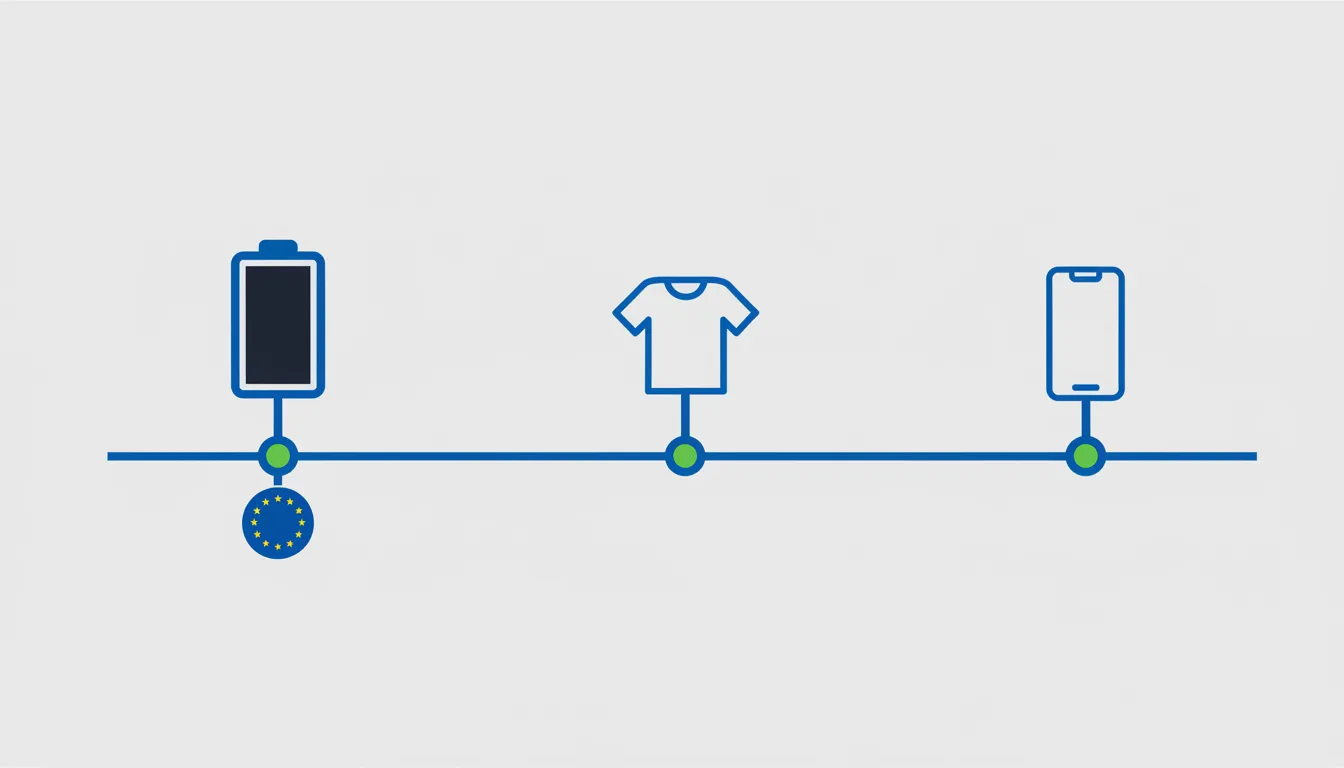
Why Batteries Are First for Digital Product Passports
Under the EU's Ecodesign for Sustainable Products Regulation (ESPR), batteries are the pilot category for Digital Product Passports. This makes sense for several reasons:
- Environmental urgency: Battery production is carbon-intensive and relies on critical raw materials
- Rapid market growth: EV batteries and energy storage systems are exponentially expanding
- Circular economy potential: Batteries contain valuable materials that should be recovered and reused
- Safety considerations: Proper handling, use, and disposal of batteries is critical
- Supply chain complexity: Battery supply chains span multiple countries and require transparency
The lessons learned from battery DPPs will inform passport requirements for textiles, electronics, construction products, and other categories in the coming years.
Battery Categories Affected by the Regulation
The regulation applies to four main battery categories, each with specific requirements:
1. Portable Batteries (Articles 13-14)
Definition: Batteries that are sealed, weigh less than 5 kg, and are not designed for industrial use.
Examples:
- Power banks
- Laptop batteries
- Smartphone batteries
- Bluetooth speaker batteries
- Portable tool batteries
- Wireless headphone batteries
Key DPP Requirements: QR code mandatory from February 2027
2. EV Batteries (Articles 7, 9, 77)
Definition: Batteries designed specifically for electric vehicle propulsion.
Examples:
- Passenger car EV batteries
- Electric motorcycle batteries
- E-scooter batteries (above certain power thresholds)
Key DPP Requirements: QR code mandatory from February 2027, extensive performance and durability documentation
3. Light Means of Transport (LMT) Batteries (Article 13)
Definition: Batteries for vehicles weighing less than 25 kg (excluding battery weight).
Examples:
- E-bike batteries
- Electric skateboard batteries
- Small electric scooter batteries
Key DPP Requirements: QR code mandatory from February 2027
4. Industrial Batteries (Articles 10-12)
Definition: Batteries designed exclusively for industrial or professional use, including stationary battery energy storage systems.
Examples:
- Warehouse equipment batteries
- Industrial robot batteries
- Grid-scale energy storage
- Backup power systems
Key DPP Requirements: QR code mandatory from February 2027 for batteries over 2 kWh
Digital Product Passport Requirements for Batteries
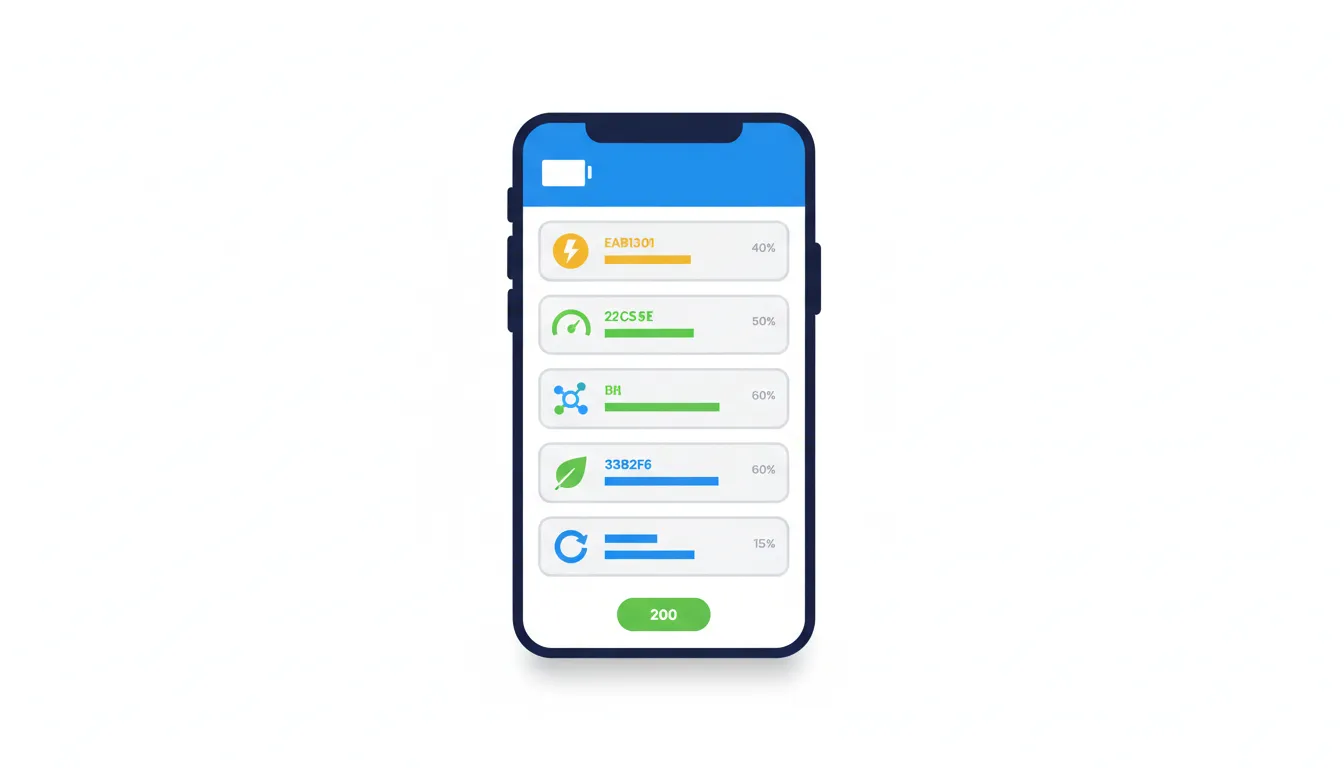
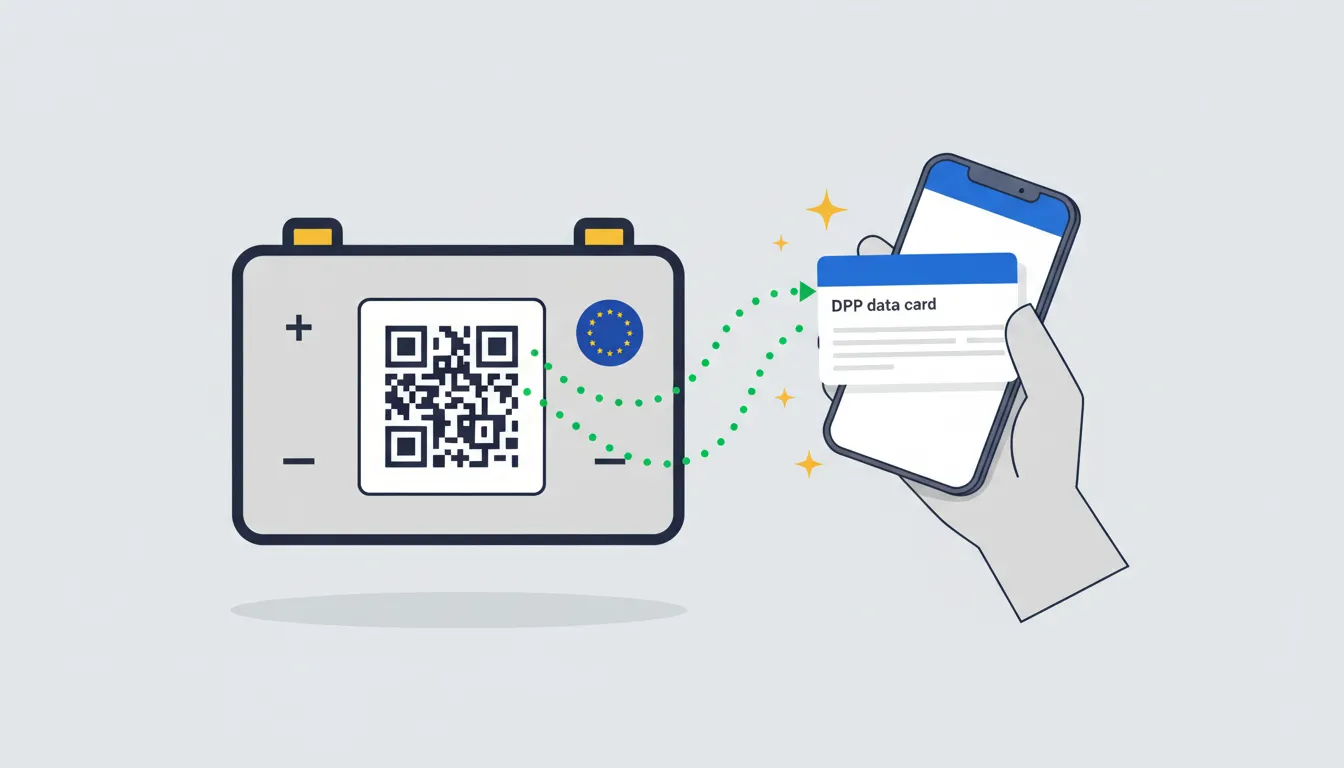
Article 65 of the Battery Regulation establishes detailed requirements for the battery passport—a digital record accessible via QR code. This information must be stored on a publicly accessible website and remain available for the lifetime of the battery plus an additional period after end-of-life.
Mandatory Information Categories
1. Battery Identification & Manufacturer Information
- Manufacturing date and place
- Unique battery identifier
- Manufacturer name and contact details
- Economic operator information (importer, distributor)
2. Battery Capacity and Performance (Article 10)
- Rated capacity in ampere-hours (Ah) or watt-hours (Wh)
- Initial capacity at point of manufacture
- Minimum, nominal, and maximum voltage
- Original power capability (for EV and LMT batteries)
- Capacity fade and power fade over expected lifetime
- Expected lifetime expressed in cycles or calendar years
- Temperature range the battery can withstand
3. Durability and Reliability
- Rated capacity at the beginning of life
- Capacity threshold for exhaustion (Article 10)
- Information about expected lifetime under reference conditions
- Measurements of energy round-trip efficiency (for stationary batteries)
- Internal resistance measurements
4. Chemical Composition (Article 13)
- Cathode chemistry and active materials
- Anode chemistry and active materials
- Electrolyte composition
- Presence of hazardous substances above threshold concentrations
- Critical raw materials used (cobalt, lithium, nickel, natural graphite)
5. Carbon Footprint Declaration (Article 7)
Mandatory from February 18, 2025 for EV batteries, LMT batteries, and rechargeable industrial batteries over 2 kWh:
- Carbon footprint of the battery per 1 kWh of total energy capacity
- Share of carbon footprint from each lifecycle stage:
- Raw material extraction and processing
- Battery manufacturing
- Distribution and storage
- Carbon footprint performance class (mandatory from 2026)
6. Recycled Content (Article 8)
Mandatory from August 2028, increasing thresholds through 2031 and 2036:
- Percentage of recycled cobalt
- Percentage of recycled lithium
- Percentage of recycled nickel
- Percentage of recycled lead
- Documentation proving recycled content claims
7. Collection, Treatment, and Recycling
- Instructions for safe dismantling and disassembly
- Information about separate collection requirements
- Recycling efficiency targets for the battery type
- Information on available take-back schemes
- Presence of hazardous substances requiring special handling
8. Instructions for Use and Safety
- Operational usage conditions
- Safe storage recommendations
- Information on risks (fire, explosion, chemical exposure)
- Preventive measures to avoid damage
- User manual and technical documentation access
QR Code Requirements (Article 65)
A machine-readable carrier (typically QR code) must be affixed to or printed on the battery, providing access to the battery passport. Requirements include:
- Size and placement: Must be readable with standard smartphone cameras
- Durability: Must remain readable for the battery's lifetime
- Accessibility: Links to publicly accessible website (no authentication required for public information)
- Data availability: Information must remain accessible for battery lifetime plus appropriate period
- Language: Available in official EU languages of markets where battery is sold
Critical Compliance Timeline
Understanding the phased implementation timeline is crucial for planning your compliance strategy:
Already in Effect
✅ August 17, 2023
- Regulation entered into force
- Due diligence requirements for cobalt, natural graphite, nickel, and lithium (Article 48)
- labeling requirements for separate collection (Annex VI)
✅ February 18, 2024
- Prohibition on placing batteries with non-rechargeable portable batteries in appliances (with exceptions)
- Removability and replaceability requirements for portable batteries (Article 11)
2025 Requirements
🔔 February 18, 2025 (IMMINENT)
- Carbon footprint declaration mandatory for EV batteries, LMT batteries, and rechargeable industrial batteries >2 kWh (Article 7)
- Technical documentation must include lifecycle carbon footprint calculation
2026 Requirements
🔔 August 18, 2026
- Carbon footprint performance classes must be declared (Article 7)
- Maximum carbon footprint thresholds for different battery categories
🔔 February 18, 2027
- Battery passport and QR code MANDATORY for all covered battery categories (Article 65)
- This is the critical deadline for e-commerce merchants
2027-2036 Requirements
🔔 August 18, 2027
- Electrochemical performance and durability parameters for portable batteries (Article 10)
🔔 August 18, 2028
- Minimum recycled content requirements begin (Article 8):
- 16% recycled cobalt
- 85% recycled lead
- 6% recycled lithium
- 6% recycled nickel
🔔 August 18, 2031
- Increased recycled content targets:
- 26% recycled cobalt
- 12% recycled lithium
- 15% recycled nickel
🔔 August 18, 2036
- Final recycled content targets:
- 26% recycled cobalt
- 20% recycled lithium
- 15% recycled nickel
Who Must Comply?
The Battery Regulation imposes obligations on all economic operators in the supply chain:
Manufacturers (Article 60)
- Ensure batteries meet all technical requirements
- Prepare technical documentation and battery passport
- Affix QR code and labels to batteries
- Conduct conformity assessment procedures
- Issue EU declaration of conformity
- Affix CE marking
Importers (Article 62)
- Verify manufacturer has complied with requirements
- Ensure technical documentation and declaration of conformity are available
- Ensure battery bears required markings and labels
- Keep documentation for 10 years after placing battery on market
Distributors (Article 63)
- Verify battery bears CE marking and required labels
- Verify required documentation is available
- Stop distribution if battery is non-compliant
- Inform market surveillance authorities of non-compliance
Online Marketplaces (Article 16)
- Allow only compliant batteries to be offered on their interface
- Display information on QR code and battery passport
- Remove non-compliant listings upon notification
- Cooperate with market surveillance authorities
E-commerce Merchants
If you sell battery-powered products online to EU customers, you are either an importer or distributor and must:
- Verify your suppliers provide compliant batteries with DPPs
- Ensure product listings display QR code information
- Maintain documentation proving compliance
- Respond to customer inquiries about battery sustainability
Penalties for Non-Compliance
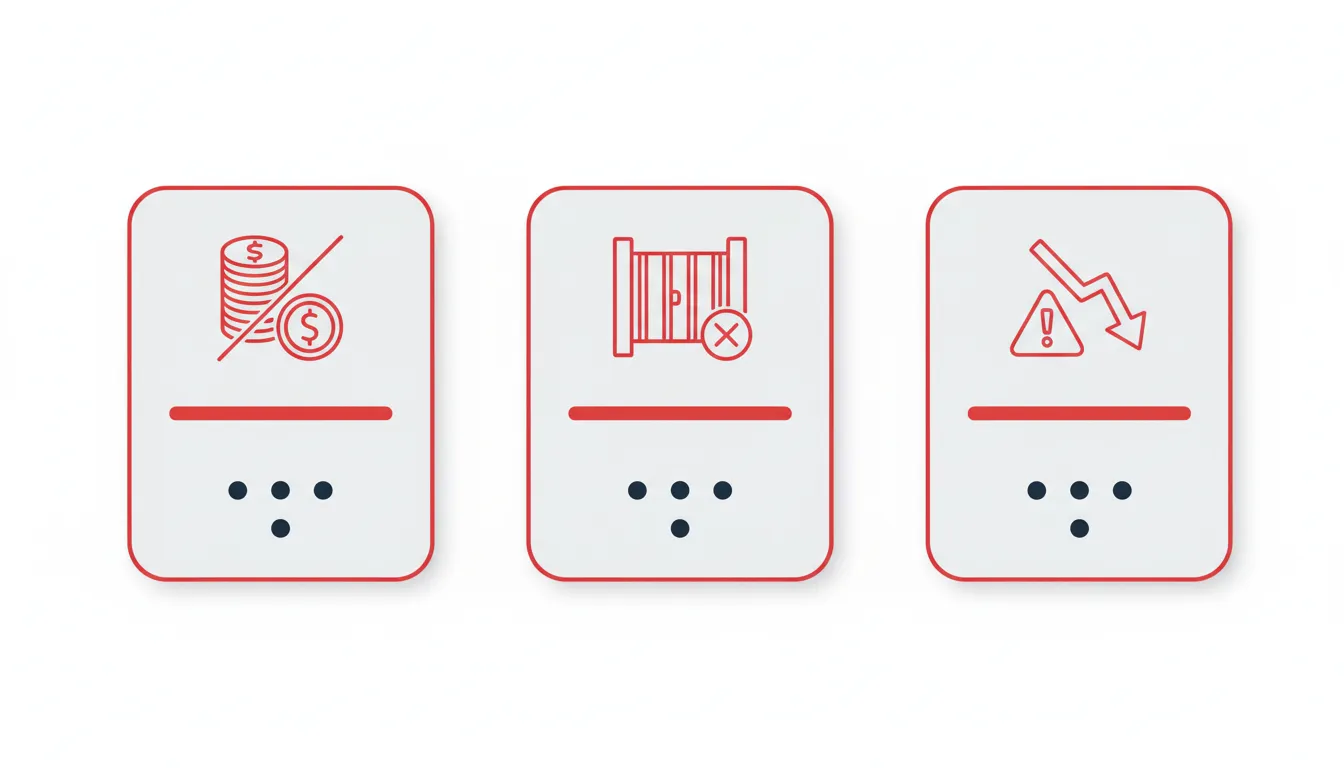
Member states are required to establish penalties for violations of the Battery Regulation (Article 93). While specific penalties vary by country, they typically include:
Financial Penalties
- Fines up to 4% of annual turnover for serious violations
- Per-product penalties ranging from €500 to €50,000 per non-compliant battery
- Administrative fees for repeat offenders
Market Access Restrictions
- Customs holds: Non-compliant products detained at EU borders
- Market withdrawal orders: Existing stock must be recalled
- Sales bans: Prohibition on selling specific products or categories
Reputational Damage
- Public disclosure: Non-compliance published on market surveillance websites
- Customer trust erosion: Negative perception among eco-conscious consumers
- Retailer delisting: Major platforms may remove non-compliant sellers
Criminal Liability
In cases of severe violations involving falsification of documents or systematic non-compliance, criminal charges may be pursued against responsible individuals.
Impact on E-commerce Battery Sellers
The Battery Regulation will significantly affect how you sell battery-powered products online:
Operational Changes Required
- Supplier audits: Verify all battery suppliers can provide compliant DPPs
- Product listing updates: Include QR code information and sustainability data
- Customer communication: Educate customers about battery passport and recycling
- Documentation management: Maintain technical files and declarations of conformity
- Website updates: Create landing pages for battery passport information
Competitive Advantages of Early Compliance
Merchants who comply early can gain significant advantages:
- Market differentiation: Stand out as sustainability leaders
- Customer trust: Demonstrate commitment to transparency
- Reduced risk: Avoid last-minute compliance costs and potential penalties
- Better margins: Premium positioning for certified sustainable products
- Future-proofing: Ready for expanding DPP requirements across other product categories
Common Product Categories Affected
If you sell any of these products, you're impacted:
- ✅ Power banks and portable chargers
- ✅ Bluetooth speakers with rechargeable batteries
- ✅ Wireless earbuds and headphones
- ✅ Laptop and tablet replacement batteries
- ✅ Electric toothbrushes and shavers
- ✅ Cordless power tools
- ✅ E-bikes and e-scooters
- ✅ Smart watches and fitness trackers
- ✅ Drones with rechargeable batteries
- ✅ Photography equipment (camera batteries, flash units)
- ✅ Portable gaming devices
How PassportPro Simplifies Battery Compliance
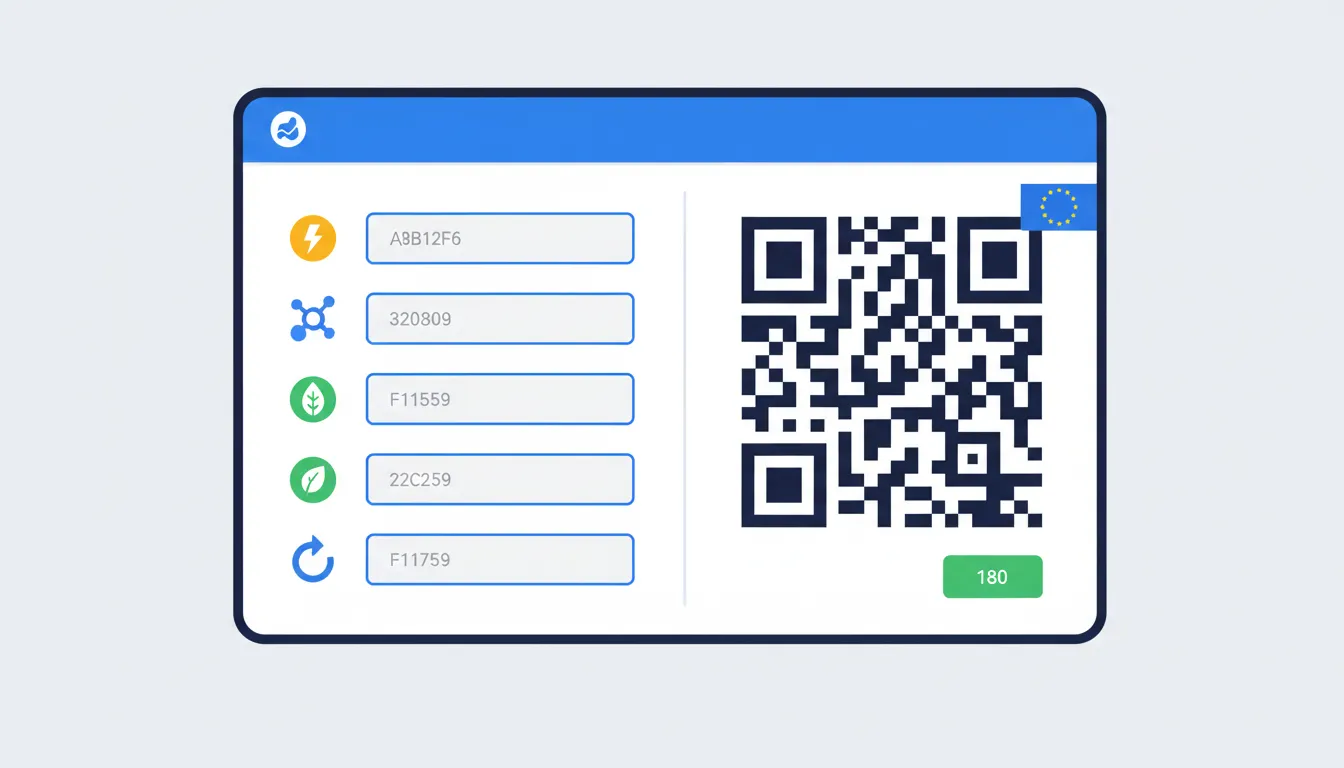
PassportPro is specifically designed to help Shopify merchants create EU-compliant Digital Product Passports for batteries and other regulated products—without the complexity of custom development or expensive consultants.
Key Features for Battery Sellers
🎯 Battery-Specific Templates Pre-built data fields matching Article 65 requirements for all battery categories (portable, EV, LMT, industrial).
📊 Carbon Footprint Calculator Guided tool to calculate and document lifecycle carbon footprint per Article 7 requirements.
🔍 QR Code Generation Automatic generation of compliant, durable QR codes that link to your battery passport pages.
🌐 Multi-language Support Automatically display battery information in all required EU languages based on customer location.
📱 Mobile-Optimized Passport Pages Beautiful, responsive landing pages that customers can easily access by scanning your battery QR codes.
📋 Documentation Management Centralized storage of technical documentation, supplier certificates, and compliance records.
🔄 Bulk Operations Update multiple product passports simultaneously when regulations change or supplier information updates.
✅ Compliance Monitoring Get notified of upcoming regulatory deadlines and requirement changes specific to your products.
Three-Step Implementation
- Connect your Shopify store and select battery products
- Complete battery passport information using our guided forms and templates
- Generate QR codes and embed them in your product listings and packaging
PassportPro handles the technical complexity while you focus on selling great products.
Step-by-Step Battery Compliance Checklist
Use this comprehensive checklist to prepare for the February 2027 Digital Product Passport deadline:
Phase 1: Immediate Actions (Q1-Q2 2025)
- Audit your product catalog to identify all battery-containing products
- Contact suppliers to request battery specifications and compliance documentation
- Obtain carbon footprint declarations for batteries (required February 2025)
- Review supplier agreements to ensure they provide necessary DPP data
- Assign internal responsibility for battery compliance (compliance officer or team)
- Calculate compliance costs (data collection, QR code labels, software tools)
Phase 2: Data Collection (Q2-Q3 2025)
- Gather technical specifications for each battery SKU:
- Capacity (Ah/Wh)
- Voltage (min/nominal/max)
- Chemistry (cathode/anode/electrolyte)
- Rated lifetime (cycles or years)
- Temperature operating range
- Weight and dimensions
- Collect sustainability data:
- Lifecycle carbon footprint
- Current recycled content percentages
- Hazardous substance declarations
- Material safety data sheets
- Document supply chain:
- Manufacturing location
- Raw material sources
- Due diligence reports for critical materials
- Compile safety information:
- User manuals
- Safe handling instructions
- Dismantling guidance
- End-of-life disposal instructions
Phase 3: Battery Passport Creation (Q3-Q4 2025)
- Select DPP solution (PassportPro or alternative platform)
- Create passport database structure with required data fields
- Build mobile-optimized landing pages for each battery SKU
- Implement multi-language support for target EU markets
- Set up QR code generation system
- Test passport accessibility on various devices and browsers
- Establish data update procedures for ongoing maintenance
Phase 4: Physical Implementation (Q1 2026-Q1 2027)
- Design QR code labels meeting durability and readability requirements
- Select label placement on products and packaging
- Test QR code scanning with various smartphone models
- Update product packaging to include QR codes
- Revise product photography showing new labels
- Order compliant labels from your label supplier
- Deplete old inventory or relabel existing stock
Phase 5: E-commerce Integration (Q1-Q2 2027)
- Update product listings with battery passport information
- Add QR code images to product detail pages
- Create educational content explaining DPPs to customers
- Update FAQ sections with battery compliance information
- Train customer service on battery passport questions
- Add compliance badges or trust marks to product pages
- Update legal pages (terms, privacy policy) for DPP data handling
Phase 6: Documentation & Monitoring (Ongoing)
- Maintain technical files for 10 years after last product sale
- Monitor regulatory updates for requirement changes
- Track recycled content targets approaching in 2028, 2031, 2036
- Conduct annual compliance audits of product portfolio
- Update passports when product specifications or regulations change
- Archive old passport versions for traceability
- Measure customer engagement with battery passports
- Benchmark competitors for best practices
Best Practices for Long-Term Compliance
Beyond the immediate checklist, follow these best practices to maintain compliance:
1. Establish Supplier Partnerships
Work closely with battery suppliers to ensure they understand EU requirements and can provide necessary data. Consider:
- Including DPP data requirements in purchase orders
- Requesting sample battery passports before large orders
- Preferring suppliers with existing EU compliance programs
- Building long-term relationships with verified compliant suppliers
2. Implement Data Governance
Battery passports must remain accurate and accessible for years. Establish:
- Version control for passport information
- Regular data validation procedures
- Backup systems for database redundancy
- Clear ownership and update responsibilities
- Procedures for handling supplier data updates
3. Educate Your Customers
Use battery passports as a marketing opportunity:
- Create blog content explaining battery sustainability (like this guide!)
- Highlight eco-friendly features in product descriptions
- Share carbon footprint comparisons with competitors
- Offer recycling incentives through passport-accessed programs
- Position your brand as sustainability leaders
4. Plan for Future Requirements
The battery regulation will evolve. Stay ahead by:
- Monitoring European Commission implementing acts
- Participating in industry associations and working groups
- Beginning recycled content sourcing now (before 2028 mandate)
- Designing for battery removability and replaceability
- Investing in battery performance testing capabilities
5. Leverage Compliance for Competitive Advantage
Don't view DPPs as mere regulatory burden—use them strategically:
- Highlight superior battery performance in passports
- Showcase high recycled content percentages
- Demonstrate below-average carbon footprints
- Build customer loyalty through transparency
- Premium pricing for certified sustainable batteries

Conclusion: Turn Compliance into Competitive Advantage
The EU Battery Regulation represents the most comprehensive battery sustainability framework in the world—and the Digital Product Passport requirement will fundamentally reshape how battery-powered products are sold in Europe. With the mandatory February 2027 QR code deadline rapidly approaching, now is the time to act.
While compliance may seem daunting, it also represents an opportunity. Merchants who embrace battery passports early will:
- Build stronger customer trust through transparency
- Differentiate from competitors still scrambling to comply
- Position themselves as sustainability leaders
- Future-proof their business for expanding DPP requirements
- Avoid costly penalties and market access disruptions
The batteries you sell today are the testing ground for tomorrow's circular economy. By implementing Digital Product Passports now, you're not just checking a regulatory box—you're joining the movement toward truly sustainable e-commerce.
Ready to make your batteries EU-compliant? PassportPro makes battery passport creation simple, fast, and affordable. From carbon footprint calculations to QR code generation to multi-language passport pages, we've built everything Shopify merchants need to comply with confidence.
Start your free trial of PassportPro and create your first battery passport in minutes.
Additional Resources
- Official Regulation Text: Regulation (EU) 2023/1542
- European Commission Battery Portal: Battery Regulation Implementation
- ESPR Framework: Ecodesign for Sustainable Products Regulation
- Recycling Requirements: Battery Collection and Recycling Targets
This guide is updated regularly to reflect the latest regulatory developments. Last updated: February 2025.
Disclaimer: This article provides general guidance and should not be considered legal advice. Consult with compliance professionals for specific situations.
Ready to get started?
Create EU-compliant Digital Product Passports for your Shopify store in minutes.
Install PassportPro on Shopify