ESPR Deadlines by Product Category: 2025–2030 Working Plan for Shopify Merchants
ESPR Deadlines by Product Category: 2025–2030 Working Plan for Shopify Merchants
The European Commission's first Ecodesign for Sustainable Products Regulation (ESPR) Working Plan gives merchants the clearest official view yet of which product groups are next. It prioritises textiles and apparel, furniture, tyres, mattresses, iron and steel, aluminium, repairability, and recycled-content rules for electrical and electronic equipment between 2025 and 2030.
But the dates are frequently misreported. The years in the Working Plan are indicative targets for adopting delegated acts. They are not automatic dates on which every merchant in that category must launch a Digital Product Passport (DPP).
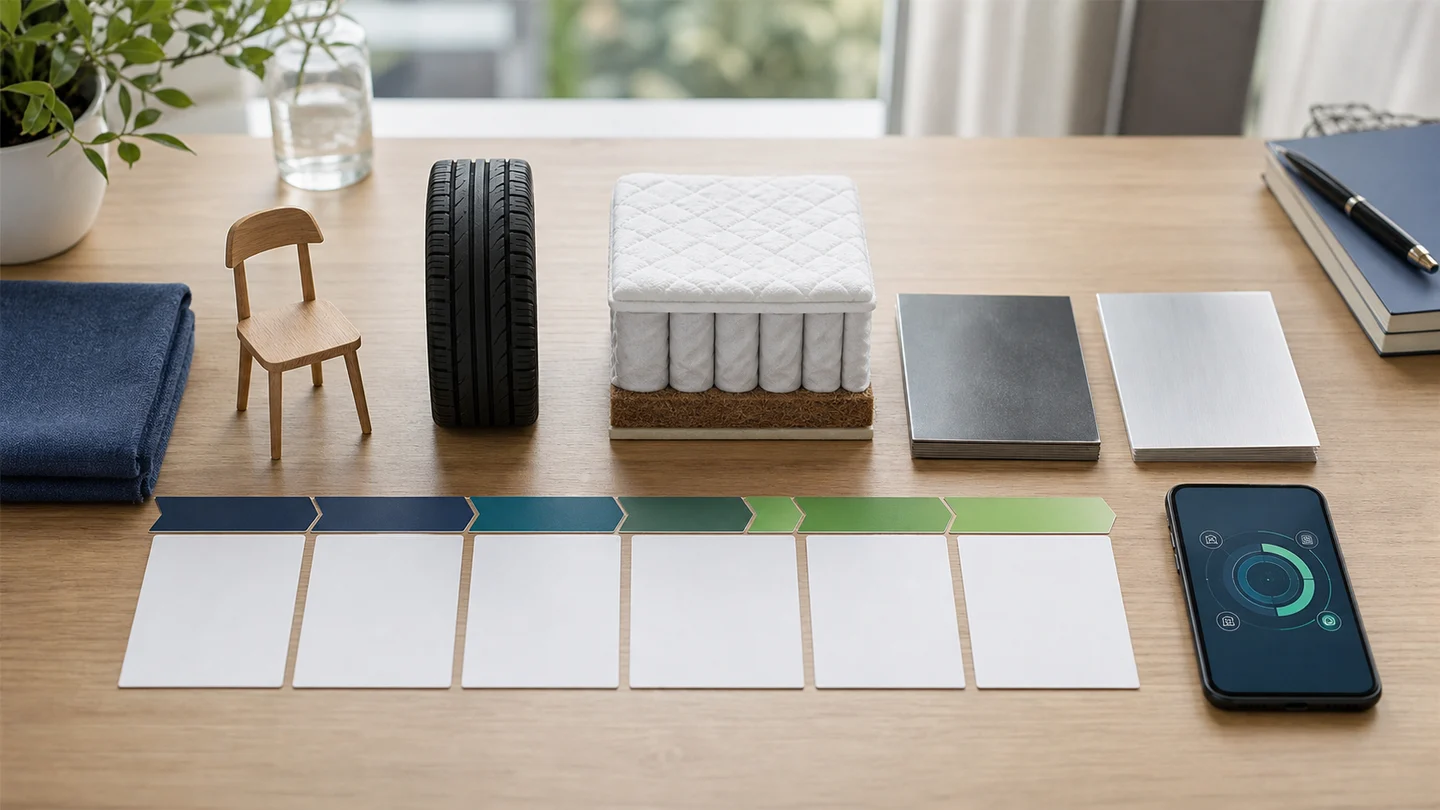
The essential distinction: a Working Plan year tells you when the Commission aims to adopt a category rule. The future delegated act will define the exact products, ecodesign and data requirements, DPP design, conformity process, and application date.
Official ESPR Timeline by Product Category
The Commission adopted the 2025–2030 Working Plan on 16 April 2025. Its main new measures are:
| Product or horizontal measure | Indicative year for adopting the EU measure | What a Shopify merchant should infer today |
|---|---|---|
| Iron and steel | 2026 | Upstream metal data may become important to brands using covered inputs, but final scope and requirements still depend on the delegated act |
| Textiles and apparel | 2027 | Fashion brands should prioritise fibre, supplier, durability, repair, and product-identity data; 2027 is not itself a DPP go-live date |
| Tyres | 2027 | Expect work on recyclability, recycled content, and end-of-life impacts alongside existing tyre rules |
| Aluminium | 2027 | Brands using substantial aluminium should prepare traceable material and recycled-content evidence while awaiting scope |
| Repairability, including possible scoring | 2027 | The horizontal study may cover consumer electronics and small household appliances; exact products and scoring are not final |
| Furniture | 2028 | Material, component, durability, disassembly, repair, and end-of-life data are sensible readiness priorities |
| Mattresses | 2029 | Treat mattresses separately from the broader furniture measure; prepare material-layer and circularity evidence |
| Recycled content and recyclability of electrical and electronic equipment | 2029 | The horizontal measure may affect a broad electronics range; wait for final scope before claiming a fixed requirement |
These are the Working Plan's indicative adoption years, not guaranteed dates. As of 13 July 2026, the Commission's dedicated iron-and-steel page still describes its ESPR requirements as a future delegated act and gives Q4 2026 only as an indicative adoption timeline.
The Working Plan runs to 2030 and provides for a mid-term review in 2028. Priorities and timing can evolve as preparatory studies, impact assessments, Ecodesign Forum consultation, and legislative drafting progress.
Why “Adoption Year” Is Not “Compliance Deadline”
ESPR is a framework regulation. It creates the legal machinery for product-specific or horizontal ecodesign rules, but most merchant-facing requirements arrive through later delegated acts.
The sequence is broadly:
- Working Plan priority: the Commission identifies a product group or horizontal measure and an indicative adoption year.
- Preparatory work: technical studies examine scope, environmental impacts, market data, possible requirements, testing, and verification.
- Consultation and impact assessment: stakeholders and the Ecodesign Forum review the policy options.
- Delegated act: the Commission adopts the legally binding product requirements.
- Application: the date written into that act determines when affected products must comply.
Until the delegated act is final, merchants may not know:
- the exact product definitions or customs codes in scope;
- exclusions and treatment of components, spare parts, used goods, or small enterprises;
- minimum durability, repairability, recycled-content, or environmental-performance requirements;
- which data must be in the DPP and who may access each field;
- whether the passport is required at model, batch, or individual-item level;
- where the data carrier must appear and which identifier it must resolve;
- the conformity-assessment and technical-documentation method; or
- the actual application and transition dates.
This is why a headline such as “all clothing needs a DPP in 2027” is not supported by the Working Plan. The accurate statement is that the Commission targets 2027 adoption of the textiles/apparel measure.
Will Every Prioritised Product Need a Digital Product Passport?
The Working Plan describes the DPP as a key ESPR information channel. Product information will generally be provided through a DPP, while an equivalent system such as the European Product Registry for Energy Labelling (EPREL) may serve certain energy-related products.
The applicable delegated act determines the answer for a particular category. Under ESPR, the act specifies the required data, data-carrier type and placement, unique identifier level, access rights, and how long the passport must remain available. It can also require certain passport information to be accessible before purchase, including during online sales.
For merchants, the durable preparation is not to print speculative QR codes. It is to build verified, structured product data that can later feed the required carrier and schema.
Energy-Related Products in the 2025–2030 Plan
The joint ESPR and Energy Labelling Working Plan also carries forward work on energy-related products. Selected timelines relevant to consumer and e-commerce catalogues include:
| Energy-related product | Indicative adoption timeline in the Working Plan |
|---|---|
| Household dishwashers | 2026 |
| Household washing machines and washer-dryers | 2026 |
| Displays | 2027 |
| EV chargers | 2028 |
| Household fridges and freezers | 2028 |
| Electric motors and variable-speed drives | 2028 |
| Light sources and separate control gears | 2029 |
| Mobile phones and tablets | End of 2030 |
| Tumble dryers | End of 2030 |
Some of these products already have ecodesign or energy-labelling obligations. The table describes planned adoption or revision work, not a period of no regulation before that year. Check the current product-specific measure as well as the future ESPR act.
What About Footwear, Detergents, Paints, Lubricants, and Chemicals?
They are not in the main list of new product measures in the first Working Plan:
- Footwear is treated separately from textiles because its materials, functions, and supply chains differ. The Commission planned a study to be completed by the end of 2027, after which it may be considered for a later measure.
- Detergents, paints, and lubricants were not prioritised for a first-plan delegated act after the Commission assessed relative impacts, improvement potential, stakeholder support, and available resources.
- Chemicals, including possible work concerning polymers and plastics, require further scoping because the category is unusually broad and overlaps several markets.
“Not prioritised in this plan” does not mean permanently exempt. ESPR allows the Commission to address additional product groups, and other EU legislation may already regulate them.
The Battery Passport Has a Separate, Fixed Date
Batteries are the most important exception to the Working Plan logic. Their passport obligation comes from the EU Battery Regulation, not from a future ESPR category act.
From 18 February 2027, Article 77 of Regulation (EU) 2023/1542 requires a battery passport for:
- light means of transport (LMT) batteries;
- industrial batteries with a capacity greater than 2 kWh; and
- electric-vehicle batteries.
That list does not include every portable battery. A seller should classify the battery under the Battery Regulation and determine whether the battery itself or the wider product has additional legal obligations. Do not apply the separate 2027 battery date to textiles, furniture, or all electronics.
Category Readiness: What Data to Start Collecting
The final delegated acts will decide the mandatory fields. The following are preparation areas, not a claim that every field will be legally required.
Textiles and apparel
- fibre composition and component breakdown;
- supplier and manufacturing-site identifiers;
- material origin and certified-claim evidence;
- care, durability, repair, and recycling information;
- substances-of-concern data where relevant; and
- stable model, colour, size, batch, and item identifiers.
See our focused textile DPP guide and supplier data collection workflow.
Furniture and mattresses
- bill of materials by component and layer;
- wood, metal, foam, textile, adhesive, and coating specifications;
- replaceable parts and disassembly sequence;
- durability, load, repair, cleaning, and fire-safety evidence; and
- recycled content and end-of-life routes with supporting methodology.
Electronics and repairability
- hardware, firmware, and model versions;
- component and critical-material information;
- spare-part availability and repair instructions;
- disassembly, recyclability, and recycled-content evidence;
- software-support periods and update dependencies; and
- links to existing energy-label, WEEE, RoHS, battery, or other sector records.
Our electronics DPP overview explains how those data domains fit together.
Iron, steel, and aluminium inputs
- supplier and production-route identifiers;
- grade, composition, and recycled-content evidence;
- carbon and environmental data with calculation boundaries;
- chain-of-custody and batch links; and
- verification status and source documents.
Avoid publishing environmental claims before the method, boundary, and evidence are defensible. ESPR preparation should improve data quality, not create a new greenwashing risk.
A Three-Horizon ESPR Plan for Shopify Merchants
Horizon 1: Build the foundation now
- Map your catalogue to product families and likely ESPR priorities.
- Identify the manufacturer, importer, suppliers, and data owner for each family.
- Create stable product, model, batch, and component identifiers.
- Inventory what evidence exists and mark every unsupported claim.
- Add data and document requirements to supplier contracts.
- Preserve source, unit, method, verification status, effective date, and version for each material fact.
- Design product-page and passport content from the same controlled record.
Horizon 2: Follow the category rule
When a preparatory study or draft act appears, compare your catalogue against its proposed scope. Participate through an industry association where useful, estimate supplier and testing effort, and keep “proposed” fields separate from live compliance claims.
Horizon 3: Implement the adopted act
After adoption, use the final definitions—not a blog summary—to confirm scope. Build a requirements matrix covering ecodesign performance, information, technical documentation, conformity assessment, DPP carrier and identifiers, public product-page information, record retention, transition dates, and legacy stock.
Then validate a real product from supplier evidence through Shopify storefront, physical carrier, passport access, and downstream updates.
ESPR Deadline FAQ
Do textiles need a DPP in 2027?
The Working Plan targets 2027 for adoption of the textiles/apparel delegated act. The act will set the requirements and application date. Treating 2027 as a confirmed universal retail deadline is premature.
Does ESPR already apply?
Regulation (EU) 2024/1781 entered into force in July 2024 and is directly applicable, but most product-specific ecodesign and DPP duties depend on delegated acts. Some framework duties and separate measures, such as rules concerning destruction of unsold consumer products, follow their own timelines.
Should merchants wait for the final schema?
Do not build a speculative legal schema, but do start the slow work: supplier mapping, identifiers, evidence collection, units, version control, and structured product data. Those foundations remain useful when the final fields are known.
Is a QR code already an ESPR-compliant DPP?
No. A QR code is only a possible data carrier. Compliance depends on the applicable legal scope, unique identifier, required data, access rights, interoperability, persistence, and carrier placement.
Use the Timeline as a Planning Signal
The Working Plan is valuable because it shows where the Commission is investing rulemaking effort. It is not a substitute for the future delegated acts. Track both the indicative year and the legal status, and label each internal requirement as official, proposed, or assumed.
For the wider framework, read our ESPR compliance guide and Digital Product Passport introduction.
Last reviewed: 13 July 2026. This article is general educational information, not legal advice. Indicative timelines and draft measures can change; verify the adopted act for each product category.
Official Sources
Ready to get started?
Create EU-compliant Digital Product Passports for your Shopify store in minutes.
Install PassportPro on Shopify